Copilot Studio: Part 4 - Agents that outlive their creators – governance, risk, and the long tail of AI
Agents that outlive their creators – governance, risk, and the long tail of AI
In most organizations, apps get decommissioned. Workflows get retired. People move on, and someone eventually archives the mess they left behind. But agents? Agents keep acting, even when their creator is gone. That’s not a hypothetical risk. It’s already happening. Because most Copilot Studio deployments are building agents with no plan for ownership, no lifecycle guardrails, and no way to know who’s responsible once the project changes hands.
Automation doesn’t age well
A flow that fails? It throws an error. Someone notices. An agent that fails? “It might just hallucinate” a plausible answer. Or skip a trigger. Or quietly misclassify a request. And no one notices, until the wrong thing gets approved. Or never does. Now imagine that agent was built by someone who left six months ago. No documentation. No ownership transfer. No audit trail. No one even knows it still exists.
And yet, it’s still acting.
Orphaned logic is the new shadow IT
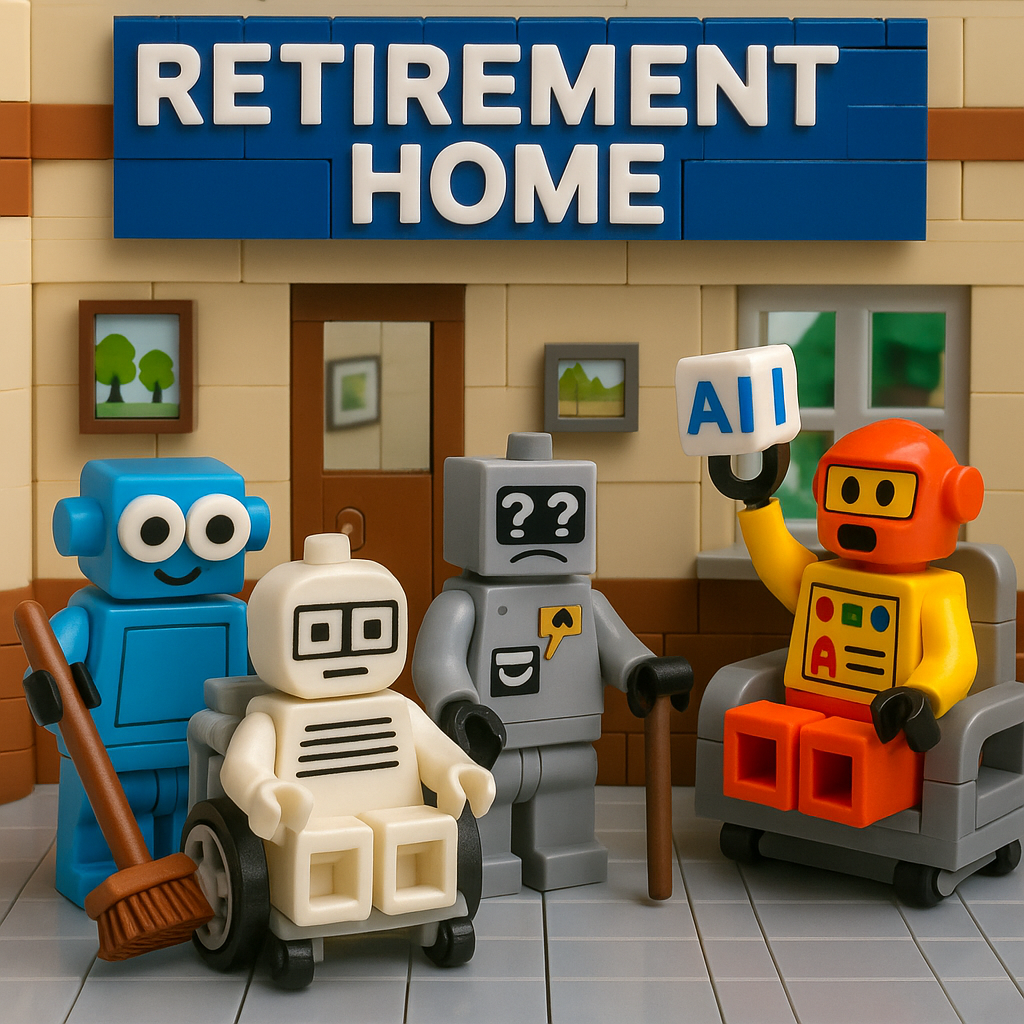
Orphaned agents don’t break all at once. They decay. The SharePoint source changes. The connector credentials expire. The business rule is revised, but not in the agent. And because it doesn’t crash, no one flags it. It just keeps delivering wrong-ish results. Enough to pass casual use. Enough to lose trust over time. When agents are treated like temporary hacks, they never get the lifecycle discipline of “real” apps. But they still live in your production environment, attached to your brand, acting in your systems. Shadow IT used to be spreadsheets and rogue access databases. Now it’s retired employees’ bots still issuing approvals.
Intent isn’t portable
Agents don’t just contain instructions. They contain assumptions. What should be escalated?
What counts as “sensitive”? What tone should be used in a customer response? These aren’t just prompts, but judgment calls: made once, encoded, and never reviewed. Until someone disagrees with the outcome and the fallout begins. You can’t inherit an agent without inheriting its design logic. And most of that logic is undocumented.
Code you can read. Flows you can inspect.
But an agent’s behavior? That often lives in prompts, embedded logic, and fuzzy mental models. Good luck reverse-engineering intent.
Governance isn’t cleanup. It’s foresight.
Most AI governance today is reactive. There’s an incident. Or a compliance audit. Or a spike in weird behavior. Then everyone scrambles to retro-document the agent, wrap it in monitoring, and assign an owner. It’s backward.
Governance should begin at the moment of creation:
- Who owns this agent?
- What is its purpose?
- How long should it run?
- What should happen when it fails?
- How is success measured
- And who reviews that?
If you can’t answer those questions, you’re not building an agent. You’re publishing a biiig liability.
The long tail of ownership
Every agent you deploy creates ongoing obligation. It needs:
- Knowledge base updates
- Prompt maintenance
- Access review
- Escalation logic refresh
- Retirement planning
And yet most agents go live with none of that defined. Because the maker is “just experimenting” or the team is “moving fast”. Then the person leaves. Or the project pivots. Or the department gets restructured. And suddenly you’re running production logic that no one can explain. AI doesn’t stop working just because you stopped watching it. That’s what makes it dangerous.
Future-proofing the invisible workforce
If your organization has a bot running in Teams, that bot is now part of your workforce. It performs tasks. Interfaces with customers. Retrieves and summarizes knowledge. Makes decisions. So treat it like a team member:
- Give it a clear role
- Document its function
- Assign an owner
- Review its performance
- Offboard it when it’s done
Because whether you track them or not, your agents are working. And if no one’s in charge, they’re still making decisions, with your name on them.
Coming up next
- Part 0: Everything is an agent, until it isn’t
- Part 1: When automation bites back – autonomy ≠ chaos
- Part 2: Copilot Studio: Part 2 – Copilot Studio agents: the ALM reality check
- Part 3: The cost of (in)action – what you’re really paying for with Copilot Studio
- Part 4: Agents that outlive their creators – governance, risk, and the long tail of AI [📍 You are here]
- Part 5: From tool to capability – making Copilot Studio strategic to be published soon™️
Published on:
Learn moreWe can help you with Copilot Studio: Part 4 - Agents that outlive their creators – governance, risk, and the long tail of AI
If you want help implementing, troubleshooting, or improving this product, contact us and we’ll point you in the right direction.
Related posts
You are holding GitHub Copilot Wrong!
Most developers think that one can’t really use GitHub Copilot wrong. There is a chat interface that lets you also choose a model, so th...
You are holding GitHub Copilot Wrong!
Part 0 showed why constant prompting, re-prompting, and steering GitHub Copilot feels fragile. Not because Copilot is unreliable, but because ...
Building a Multi-Hierarchy Ticket Classification System (Because Keywords Aren't Enough)
Look, I love a good keyword-based system as much as the next developer. They’re fast, predictable, and when your user says “VPN,&r...
Secretless cross-tenant dataverse access
Client secrets are like hiding your house key under the mat; easy to grab and impossible to audit. Certificates are just slightly better, beca...
How Azure CLI handles your tokens and what you might be ignoring
Running az login feels like magic. A browser pops up, you pick an account, and from then on, everything just works. No more passwords, no more...
How Dev Proxy teaches you to make your apps more resilient
I added Microsoft Dev Proxy to my Mermaid → Dataverse converter, because I wanted to test how it handled rate limits and API errors. What I go...
Building Azure functions that never store secrets — ever
What if your function could hit Microsoft Graph with no client secrets, no certs, and no Key Vault entries? That is exactly what a Managed id...
Introducing Mermaid to Dataverse Converter
Why diagrams matter (and why they usually fail us) Entity-Relationship Diagrams (ERDs) are the universal shorthand for talking about data mode...
It’s OK to be seen trying
It’s OK to be seen trying Somewhere along the way, we started believing that you’re only allowed to speak after you’ve figured everything out....
Stuck in pilot - Part 1: no foundations, no future
“We just need to test the AI. We’ll figure out the data later.” That sentence has quietly killed more AI pilots than any model failure ever ...