
Backing Up Your Microsoft Fabric Workspace: A Notebook-Driven Approach to Disaster Recovery
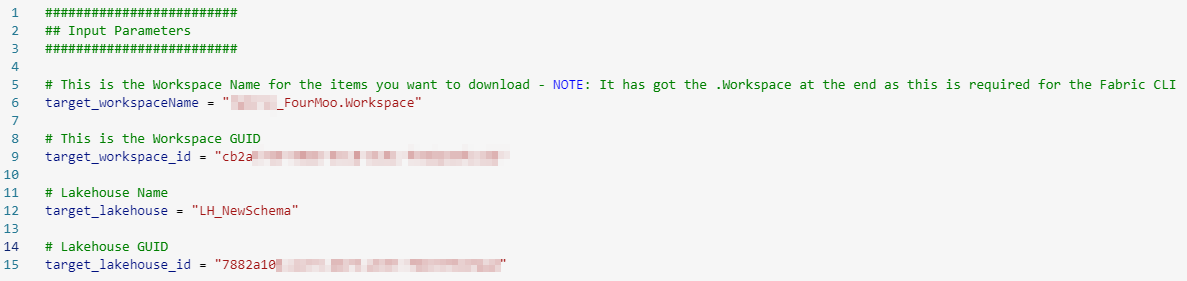
In the high-stakes world of data architecture, where downtime can cascade into real business disruptions, I’ve learned that even the most robust platforms have their blind spots. Just last month, while collaborating with a client’s Architecture team on their disaster recovery strategy, we uncovered a subtle but critical gap in Microsoft Fabric: while OneLake thoughtfully mirrors data across multiple regions...
The post Backing Up Your Microsoft Fabric Workspace: A Notebook-Driven Approach to Disaster Recovery appeared first on FourMoo | Microsoft Fabric | Power BI.
Published on:
Learn moreWe can help you with Backing Up Your Microsoft Fabric Workspace: A Notebook-Driven Approach to Disaster Recovery
If you want help implementing, troubleshooting, or improving this product, contact us and we’ll point you in the right direction.
Related posts
Storing Fabric Capacity Operation Events into a Lakehouse
This blog post will explain how to capture the data from real-time events for Fabric Operation Events and store the results in a Lakehouse. My...
Monitoring Microsoft Fabric Capacity Usage with Operation Events
In this blog post, I will show you how to set up Fabric Capacity operation events. You can find more information here: https://learn.microsoft...
How to Back Up and Restore MCP Servers and Skills in VS Code
I use VS Code and my IDE when working in Microsoft Fabric and Power BI. Over time I have downloaded and even created my own skills which I use...
Dynamically changing the Microsoft Fabric Data Warehouse SQL Pools for cost and performance
After reading about the new SQL Pools feature for Warehouses in Fabric, I had an idea, if I could change the SQL Pool configuration based on t...
Reusable AI Skills for Writing to Microsoft Fabric Lakehouse Tables from Python Notebooks and to reduce Capacity Units consumption
In this blog post below, I explain what the two skills do, why I use them in Fabric Python notebooks, how they can reduce unnecessary capacity...
A Practical Guide to use OneLake Security for OneLake Object, Row, and Column Security
In this blog post, I will show you how to configure OneLake security for a Microsoft Fabric Lakehouse. We will remove the default broad-access...
Remove Hardcoded Workspace and Item IDs with Fabric Variable Libraries to use Across Dev/Test/Prod
In this blog post I’m going to show you how you can use variable libraries with connection strings as well as items. This approach allows you ...
Using Python Notebooks to Merge Data into a Microsoft Fabric Lakehouse
In this blog post I am going to show you how to use a Fabric Python runtime notebook (This is the notebook which only uses Pure Python functio...
Using GitHub Copilot CLI to Build a Microsoft Fabric Lakehouse Table Health Pipeline
In this post I will show how I used GitHub Copilot CLI / Agent mode in VS Code to create a Microsoft Fabric pipeline that checks Lakehouse tab...