Everything You Need to Know About Robotic Process Automation
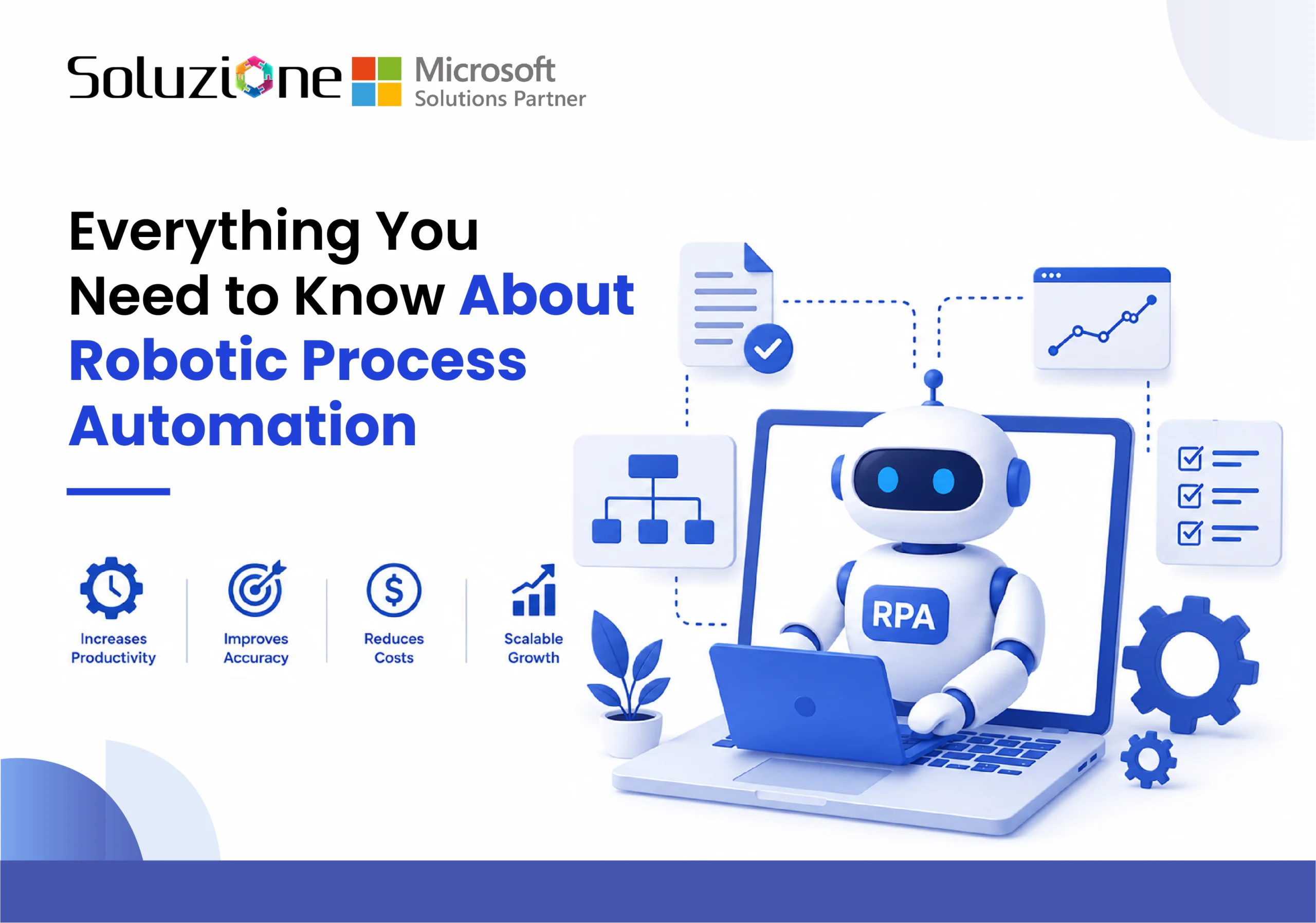
Every business wants to work faster, reduce operational costs, and deliver better customer experiences. Yet employees across industries still spend a significant portion of their time on repetitive administrative tasks such as data entry, invoice processing, report generation, customer onboarding, and email management. These manual processes can slow operations, increase the risk of errors, and limit the time available for higher-value work. This is where robotic process automation helps. Robotic process automation (RPA) is a software-based automation technology that uses bots to perform repetitive, rule-based tasks across digital systems. Rather than replacing employees, RPA helps businesses automate routine processes so teams can focus on strategic initiatives, creative problem-solving, and customer-facing activities. Organizations across sectors including finance, healthcare, manufacturing, retail, and logistics use RPA to improve efficiency, reduce manual effort, increase process accuracy, and support broader digital transformation initiatives. In this guide, we’ll explore what robotic process automation is, how it works, and how it can help your organization achieve long-term business goals. What is Robotic Process Automation (RPA)? Robotic process automation (RPA) is a software automation technology that uses bots to execute repetitive, rule-based tasks across digital systems. These bots can log into applications, extract and transfer data, generate reports,...
The post Everything You Need to Know About Robotic Process Automation appeared first on Soluzione | Microsoft Solutions Partner.
Published on:
Learn moreWe can help you with Everything You Need to Know About Robotic Process Automation
If you want help implementing, troubleshooting, or improving this product, contact us and we’ll point you in the right direction.
Related posts
11 Things You Should Know Before Attending Community Summit NA 2026
Community Summit North America 2026 is just around the corner. Taking place October 11–15 at the Gaylord Opryland Resort in Nashville, it rema...
Microsoft Power Automate Pricing Plans: A Comprehensive Guide
Microsoft Power Automate has become a popular choice for organizations looking to automate workflows, connect applications, and accelerate bus...
Ganesh Festivity 2026: Celebrating Togetherness, Culture, and Team Spirit at Soluzione
Soluzione proudly continued its cherished tradition of celebrating Ganesh Festivity in 2026, bringing together employees for 11 days of devoti...
Community Summit North America 2026: What Dynamics 365 Users Should Know About
If your organization runs Dynamics 365 (or is evaluating, migrating to, or expanding it) and you haven’t registered for Community Summit North...
Soluzione’s Excellence Journey Reaches New Heights with CMMI Level 3 Certification
From more than 15 years of software excellence to CMMI Maturity Level 3 success, Soluzione IT Services has successfully taken the flexible, pa...
Microsoft Managed Services: A Comprehensive Guide
For more than three decades, Microsoft has stood as a pioneer in enterprise software, delivering solutions that have become the backbone of mo...
How Financial Services Firms Use Power Platform for Automation
Microsoft Power Platform is a leading low-code platform that helps organizations build custom applications, automate business processes, conne...
How Is Microsoft Copilot Changing The Day-To-Day Work For Businesses?
Artificial intelligence (AI) is no longer a futuristic concept; it’s becoming an essential part of the modern workplace. And Microsoft 3...
Top AI Use Cases in Dynamics 365 CRM that Boost ROI
Artificial Intelligence (AI) in Microsoft Dynamics 365 CRM has become a key component since Microsoft introduced Copilot. This addition change...
A Comprehensive Guide To Utilize Agentic AI For Business Growth
Artificial intelligence has moved far beyond simple automation and content generation. Today, a new category — agentic AI — is emerging as one...