
How Financial Services Firms Use Power Platform for Automation
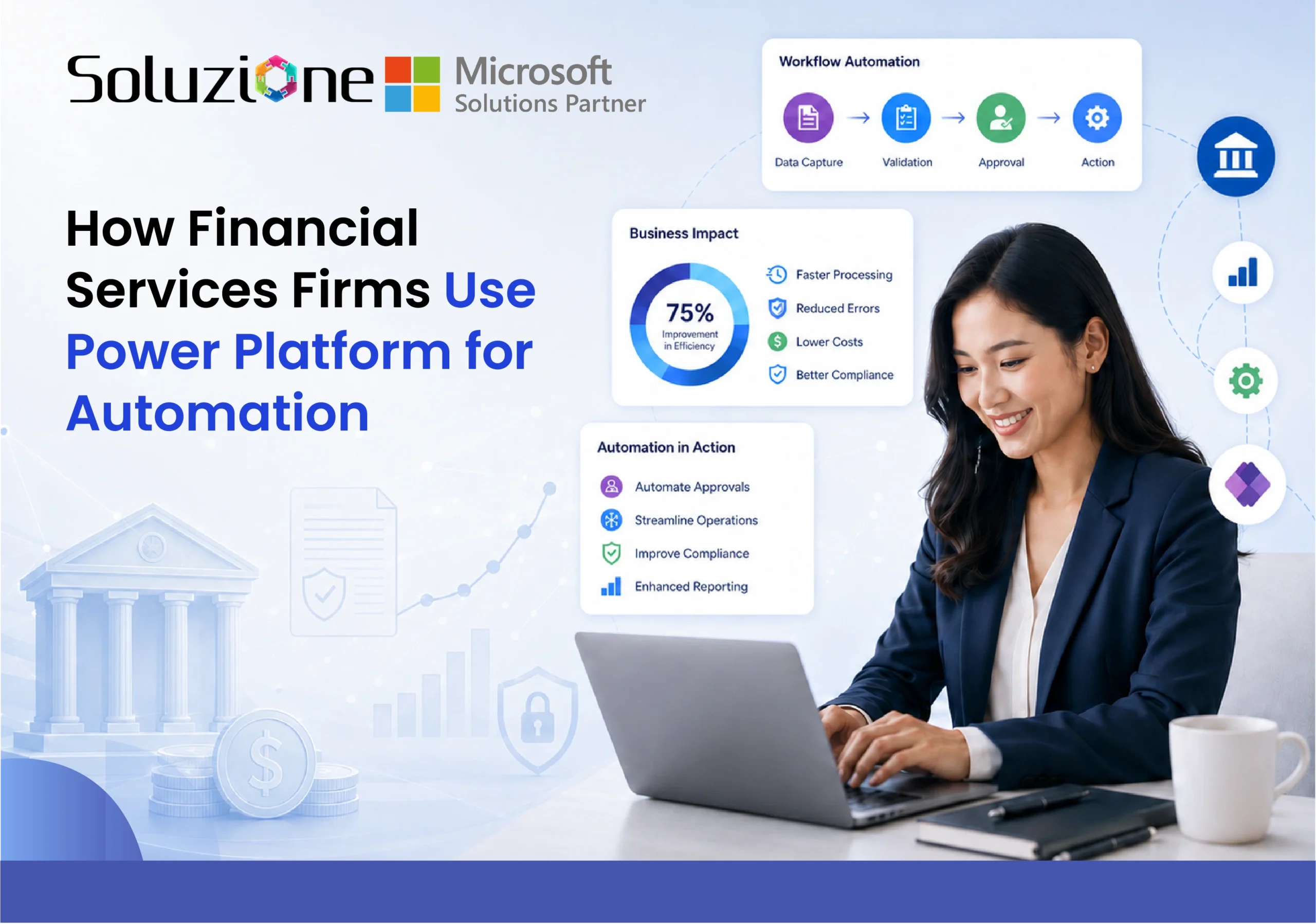
Microsoft Power Platform is a leading low-code platform that helps organizations build custom applications, automate business processes, connect data across systems, and generate actionable insights. By reducing the need for extensive coding, it enables businesses to develop and deploy solutions faster. For financial institutions, Power Platform helps businesses to modernize operations without replacing existing technology investments. Banks, insurance companies, and other financial organizations often rely on multiple core systems, legacy applications, and third-party platforms that operate in silos. This can lead to manual processes, disconnected data, duplicate work, and slower decision-making. Microsoft Power Platform helps to overcome these challenges by securely integrating existing systems, automating repetitive workflows, and enabling teams to build scalable business solutions with minimal coding. Its seamless integration with Microsoft 365, Dynamics 365, Azure, and hundreds of other applications allows organizations to improve efficiency, strengthen collaboration, and accelerate digital transformation while maintaining enterprise-grade security and compliance. In today’s post, we will understand how financial firms are leveraging Power Platform, review real-world examples from industry leaders, and understand how businesses can maximize their automation investments with the right implementation strategy. Why Financial Services Firms Are Investing in Microsoft Power Platform Financial firms perform thousands of tasks repetitively. This...
The post How Financial Services Firms Use Power Platform for Automation appeared first on Soluzione | Microsoft Solutions Partner.
Published on:
Learn moreWe can help you with How Financial Services Firms Use Power Platform for Automation
If you want help implementing, troubleshooting, or improving this product, contact us and we’ll point you in the right direction.
Related posts
How Microsoft Copilot Is Transforming Dynamics 365 Workflow
For organizations using Microsoft Dynamics 365, AI has now become a key part of their daily workflow, helping teams work more efficiently and ...
AI at Work Roadmap: The End of Release Waves Era
On August 25, 2026, Microsoft announced a major shift in how it shares upcoming capabilities. The familiar twice-yearly Release Wave 1 and Rel...
Power Apps vs Custom Development: Which One Should You Choose?
When businesses look for software solutions, they also need to think about what approach works best for them. This includes considering how ur...
Dynamics 365 vs Custom CRM: What Growing Businesses Should Choose in 2027?
As businesses grow, managing customer relationships becomes more complicated. That’s why many businesses use CRM software mainly to manage all...
Why Your CRM Fails After Implementation and How Dynamics 365 Fixes It
Research suggests that between 30% to 50% of CRM projects fail to achieve their intended goals, even after everything seems to be set up corre...
ISO 27001:2022 Information Security Management System
Most software service providers claim to take information security seriously, but with an independent certification, the recipient gets strong...
Top 7 ERP Software Solutions Every Retailer Needs in 2027
Enterprise Resource Planning (ERP) software is the system that keeps modern businesses running smoothly. ERP platforms bring together critical...
The Future of Cloud Solutions: Microsoft CSP Insights
Cloud technology has become an important part of businesses. But managing it is not simple at all. From choosing the right Microso...
11 Things You Should Know Before Attending Community Summit NA 2026
Community Summit North America 2026 is just around the corner. Taking place October 11–15 at the Gaylord Opryland Resort in Nashville, it rema...
Microsoft Power Automate Pricing Plans: A Comprehensive Guide
Microsoft Power Automate has become a popular choice for organizations looking to automate workflows, connect applications, and accelerate bus...