
Azure Purview expands relational database support - IBM DB2, MySQL and PostgreSQL
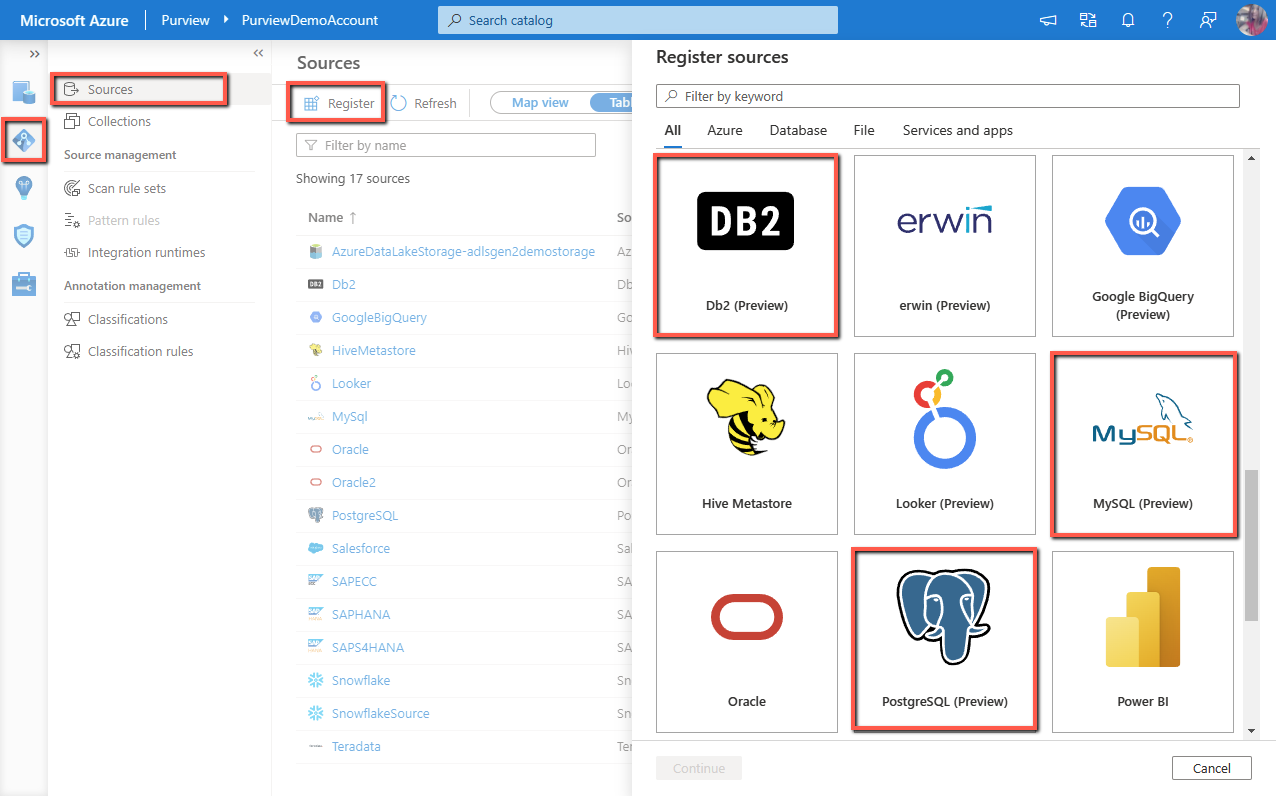
Azure Purview is a unified data governance service that enables organizations to easily create a holistic, up-to-date map of your data landscape across on-premises, multi-cloud, and SaaS applications with automated data discovery. Now Purview adds IBM DB2, MySQL and PostgreSQL to its growing fleet of data source support to further expand coverage of various types of relational databases. You can scan your databases, then manage and govern your data in Azure Purview.
Register and scan
Azure Purview data source administrators can start by registering a DB2, MySQL or PostgreSQL source under the data map, and set up reoccurring or one-time scan. You can choose to scan the entire database(s) or only the selective schemas with interest. During scan, Purview extracts metadata including the server, databases, schemas, tables, views, table/view columns, etc., and fetches lineage on assets relationships among tables and views.
Learn more about the prerequisites and step-by-step instruction to register and scan DB2, MySQL and PostgreSQL in Azure Purview.
Search and browse assets
Once the scan completes, you can discover assets via search or browse.
Search for the assets by keyword, and narrow down results by using the facet filters.

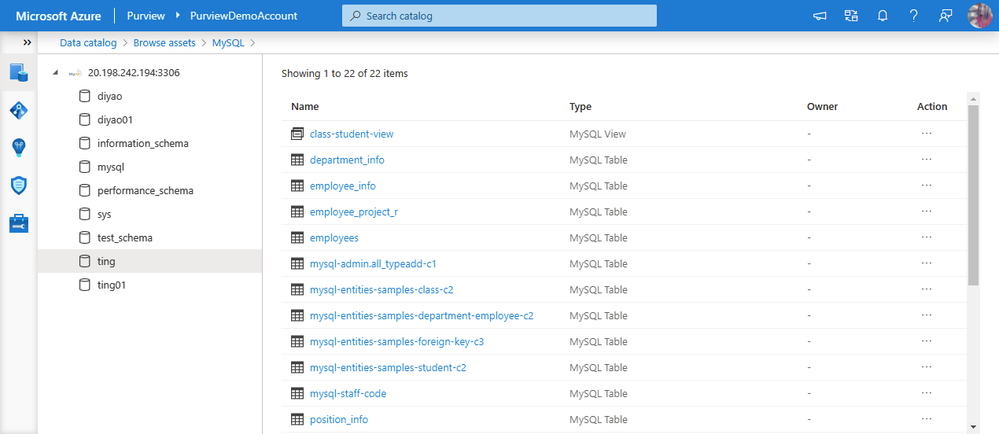
To browse, click on the “Browse assets” tile on the Purview home page, navigate to the “By source type” tab and select the data source type. You can then see the list of assets brought in by the scan.
View and manage metadata
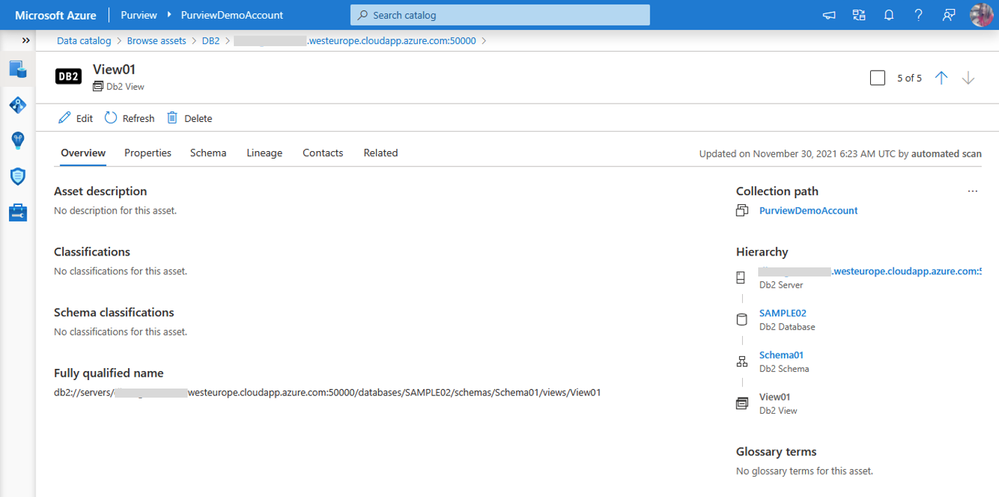
Click into the asset to view details including the properties, schema, lineage, and more. You can also add business metadata like descriptions, glossary terms, contacts, and manually classify the data assets to further manage and govern your data in Purview.

Get started today!
- Quickly and easily create an Azure Preview account to try the features.
- Learn more about Connect to and manage DB2 in Azure Purview.
- Learn more about Connect to and manage MySQL in Azure Purview.
- Learn more about Connect to and manage PostgreSQL in Azure Purview.
- See the full list of Azure Purview supported sources.
Published on:
Learn moreWe can help you with Azure Purview expands relational database support - IBM DB2, MySQL and PostgreSQL
If you want help implementing, troubleshooting, or improving this product, contact us and we’ll point you in the right direction.
Related posts
Microsoft Purview DevOps policies enable at scale access provisioning for IT operations
Microsoft Purview access policies enable customers to manage access to different data systems across their entire data estate, all from a cent...
Share data with Microsoft Purview for Azure storage with private endpoints or VNET restrictions
This is a follow-up post on a recently published article on sharing data in near real-time with Microsoft Purview in-place data sharing for Az...
Managed attributes (public preview) and rich text editor in Data Catalog
Managed Attributes (Public Preview) Managed attributes allow you to define and group key-value pairs that can enrich technical assets ...
Share data near real-time with Microsoft Purview in-place data sharing for Azure Storage
Seamless data sharing between organizations eliminates data silos, facilitates data-empowered decisions and unlocks tremendous competitive adv...
Of Kings & Queens and SAP scans to identify the right lineage for a marriage proposal
Origin and lineage are fundamental properties being used to balance trustworthiness, value, and quality for all sorts of things in life. In ad...
Microsoft Purview Data Estate Insights will be generally available July 1, 2022
As organizations increasingly rely on their data to obtain valuable insights, it’s become an imperative for the Chief Data Officer (CDO) to en...
Microsoft Purview Data Policy for SQL DevOps access provisioning now in public preview
Discovering the right data and getting timely and compliant access to data are huge problems for modern enterprises. The Microsoft Purview Dat...
Govern your Snowflake data with Azure Purview
Azure Purview as a unified data governance service keeps expanding support for various data sources across on-premises, multi-cloud, and SaaS ...
Azure Purview adds support for SAP HANA
Azure Purview now supports SAP HANA to help you more effectively discover and map your data estate across the hybrid landscape. You can scan y...
Azure Purview Managed Vnet, Vnet Integration Runtime and Managed Private Endpoints
We are glad to announce support for Azure Purview managed Vnet, Vnet Integration Runtime and managed private endpoint connections today, in pu...