
How to upload files to SharePoint for Dataverse integration in a Power Apps canvas appp

Use Case
Recently, someone asked me if it was possible to utilize the SharePoint integration in Dataverse not only from a model-driven app, but also from a canvas app. Challenge accepted!
Tl;dr: yes, it is possible and it’s easier than you might think!
Some prep work
First, we will need to do some prep work.
- Setup SharePoint integration in Dataverse - here is a good blog post by Matthew Devaney that will guide you
- Make sure that the SharePoint folders that get created, do not append the record name of the Dataverse record with some GUID (Microsoft does that so that there are no duplicates, if you for example name the record like a customer and then have 5 customers with name
Miller.) You can do this with an amazing tool by Sean McNellis, Shaun Wilkinson describes how to do this. - We will need the SiteId and DriveId of our SharePoint library. You can get those using Graph EXplorer
The canvas app
At a minimum, you will need to have 3 things
- a connector, that does the heavy lifting calling the right endpoint in the Graph API to upload a file to a specific folder - we will use the Office 365 Groups connector
- an attachment control (you get this from a form, connect this to a random SharePoint list, cut out the DatacardValue control, rename to Attachments and delete the rest of the form)
- a button that will take care of the action.
I also added a table/gallery so that I can choose the record to which I want to associate a file.
It looks like this:
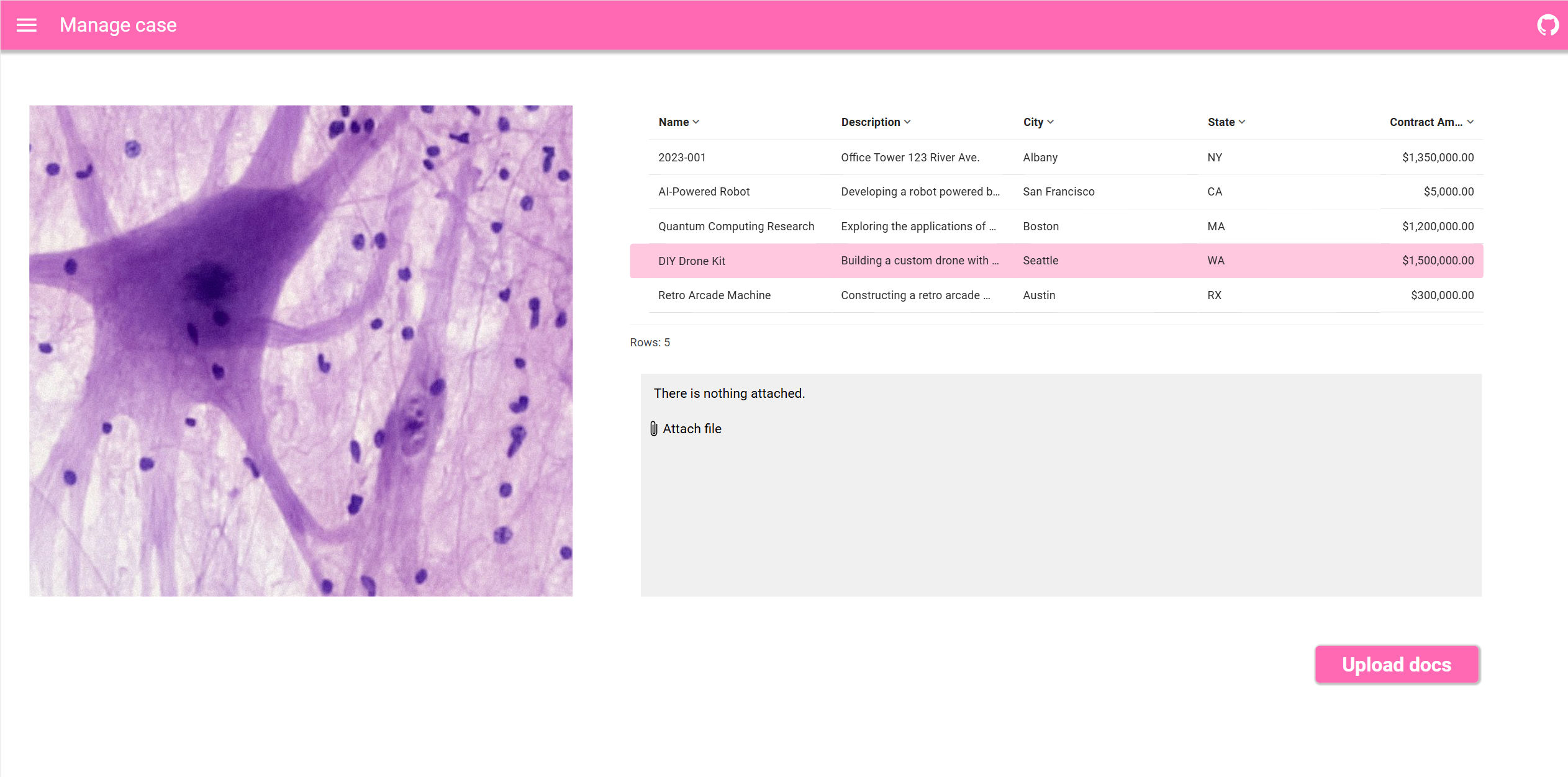
Table/Gallery
- Add the Dataverse table to your app and connect your table/gallery to it
- Add the Office 365 Groups connector
- In the OnSelect of the table, put
Set(varDriveId, "<DriveId goes in here>");
Set(varSiteId, "<SiteID goes in here>");
Set(varFolder, Table1.Selected.Name)
Button
- Add a button
- Put in the OnSelect
ForAll(
Attachments.Attachments,
Office365Groups.HttpRequest(
"https://graph.microsoft.com/v1.0/sites/" & varSiteId & "/drives/" & varDriveId & "/root:/" & varFolder & "/" & ThisRecord.Name & ":/content",
"PUT",
ThisRecord.Value
)
);
Reset(Attachments);
This will upload all your files that you select with the Attachments control and to a folder that has the same Name like the associated record that we selected in the table/gallery. If the folder does not exist yet, it will be created, if it already exists, then the file will be only uploaded into the folder.
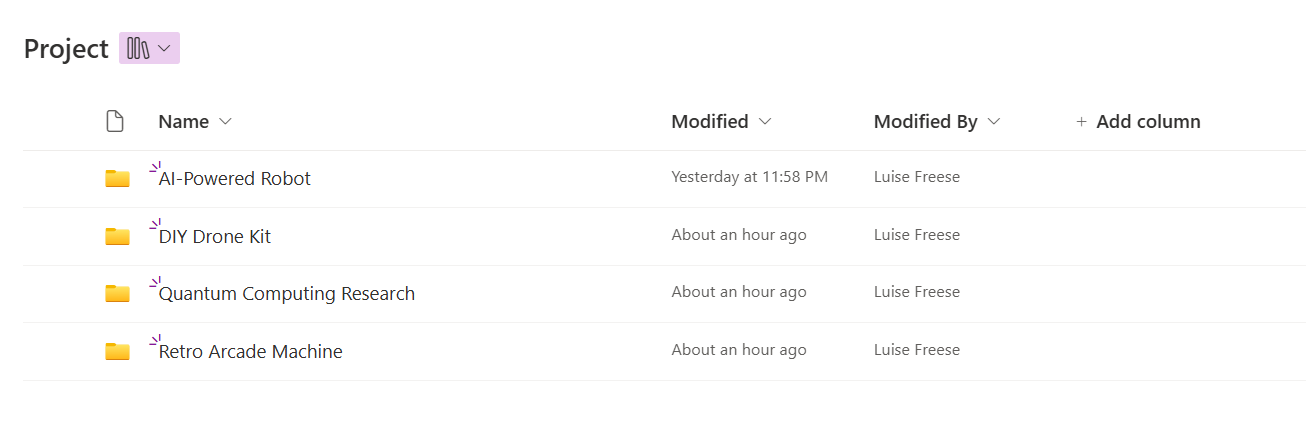
As a result, regardless if we use the canvas app or the model-driven app to upload files, they all get associated with the correct record in Dataverse"
If you’d like to know how to display previews from files on SharePoint in the canvas app, here is a neat blog post by Diana Birkelbach
Conclusion
Canvas app can work nicely in addition to a model driven app with SharePoint integration, powered by the Office 365 Groups connector. Let me know what you think!
Published on:
Learn moreWe can help you with How to upload files to SharePoint for Dataverse integration in a Power Apps canvas appp
If you want help implementing, troubleshooting, or improving this product, contact us and we’ll point you in the right direction.
Related posts
You are holding GitHub Copilot Wrong!
Most developers think that one can’t really use GitHub Copilot wrong. There is a chat interface that lets you also choose a model, so th...
You are holding GitHub Copilot Wrong!
Part 0 showed why constant prompting, re-prompting, and steering GitHub Copilot feels fragile. Not because Copilot is unreliable, but because ...
Building a Multi-Hierarchy Ticket Classification System (Because Keywords Aren't Enough)
Look, I love a good keyword-based system as much as the next developer. They’re fast, predictable, and when your user says “VPN,&r...
Secretless cross-tenant dataverse access
Client secrets are like hiding your house key under the mat; easy to grab and impossible to audit. Certificates are just slightly better, beca...
How Azure CLI handles your tokens and what you might be ignoring
Running az login feels like magic. A browser pops up, you pick an account, and from then on, everything just works. No more passwords, no more...
How Dev Proxy teaches you to make your apps more resilient
I added Microsoft Dev Proxy to my Mermaid → Dataverse converter, because I wanted to test how it handled rate limits and API errors. What I go...
Building Azure functions that never store secrets — ever
What if your function could hit Microsoft Graph with no client secrets, no certs, and no Key Vault entries? That is exactly what a Managed id...
Introducing Mermaid to Dataverse Converter
Why diagrams matter (and why they usually fail us) Entity-Relationship Diagrams (ERDs) are the universal shorthand for talking about data mode...
It’s OK to be seen trying
It’s OK to be seen trying Somewhere along the way, we started believing that you’re only allowed to speak after you’ve figured everything out....
Stuck in pilot - Part 1: no foundations, no future
“We just need to test the AI. We’ll figure out the data later.” That sentence has quietly killed more AI pilots than any model failure ever ...