
Raincode 360 on Azure: make your mainframe applications truly cloud-native in Azure!
We are often asked about hosting mainframe applications on Azure. Leaving the mainframe is only part of the story. You should want more than that. Why would you go through the hassle of a complete migration project if you end up with something just as inflexible, as monolithic, and as intrinsically inconvenient as the platform you’re moving away from?
You don’t want your critical mainframe applications to simply run on a somewhat cheaper box either: you want to take advantage of the newest cloud-native technologies that are now available to you, technologies that allows for more flexibility, more scalability, and more evolutions of your applicative landscape.
But as for many other young concepts that you’ve seen before (think of client-server or object-orientation, for instance), the definition for cloud-native is still a bit unclear. You don’t want to be gaslighted with buzzwords, twisted to the point where they are empty of any meaning. Countless tools and systems in the world of mainframe migration are cloud-native in name only, paying lip service to the concept with little underlying substance, nothing more than a box to check in a marketing document.
In stark contrast, Raincode talks the talk and walks the walk when it comes to making its toolset as Azure cloud native as it gets:
- A true modular architecture which allows you to deploy containers with megabytes rather than gigabytes of payload, giving justice to the “micro” in micro-services.
- Adaptable when it comes to architecture, giving you the choice among a large variety of deployment models to best suit your environment and your requirements (Containers, Azure functions, web services, PaaS, IaaS, etc.).
- Extensively documented use cases running in production today and that demonstrate this variety.
- Access to the latest technologies (including dapr, AKS, Azure Container Apps and more).
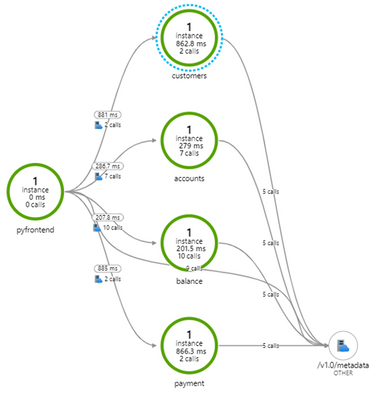
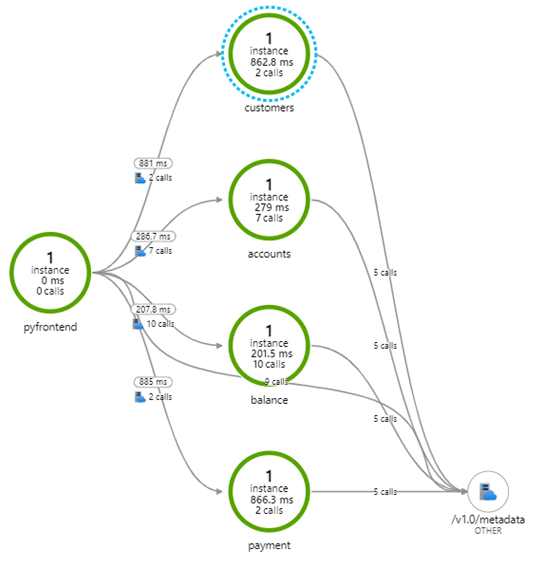
Application map (as produced by Application Insight) of a Raincode cloud-native application, running in Azure Container Apps and where the components (COBOL, PL/I, python) communicate using dapr
Don’t just take our word for it: see the technology in action on Raincode 360!
Available on the Azure Marketplace, Raincode 360 is a fully configured system, including all Raincode products, together with sample code and data. In its latest version, which was made publicly available in December 2022, Raincode 360 was upgraded to rely on the latest technologies, including Azure Container Apps.
Try it out, run the cloud-native demos running in your Azure subscription, see them in action, and get a taste of how this technology can give a future to your mainframe applications.
Raincode 360 is – literally – just a click away. And by the way, it’s also free for you to enjoy extensively.
Learn more:
Mainframe to Cloud Native - Raincode
Contributors:
Larry Mead (Principal TPM, Microsoft)
Darius Blasband (CEO, Raincode)
Published on:
Learn moreRelated posts
VMware HCX Design with Azure VMware Solution
Overview VMware HCX is one of the Azure VMware Solution components that generates a large number of service requests from our customers. The A...
Azure Backup and DR: Cross-Region Restore - Exploring Solutions
Azure Backup and DR: Cross-Region Restore - Exploring Solutions When building a Disaster Recovery (DR) plan, customers often face chall...
Microsoft is headed to VMware Explore 2024 in Barcelona!
Microsoft is headed to VMware Explore 2024 in Barcelona! If you want to know about running VCF Private Clouds in Azure, the work we ar...
IBM Power Virtual Server and Microsoft Azure Multi-cloud Integration Patterns
IBM Power Virtual Server and Microsoft Azure Multi-cloud Integration Patterns &nbs...
Enhancing Disaster Recovery and Ransomware Protection with Azure VMware Solution and JetStream
Enhancing Disaster Recovery and Ransomware Protection with Azure VMware Solution and JetStream Software Disaster Recovery (DR) ...
Microsoft is headed to VMware Explore 2024 in Las Vegas
If you want to know about Azure, the work we are doing in partnership with VMware by Broadcom, or have a conversation about your VMwar...
Azure VMware Solution using a public IP down to the NSX-T Edge; configure SNAT, No-SNAT & DNAT
Azure VMware Solution How To Series: Configuring NSX-T SNAT, No-SNAT & DNAT rules Overview Requirements Lab Environment NAT Rules K...
Azure VMware Solution now available in India Central
Azure VMware Solution has expanded its reach and is now available in India Central, marking it as the 33rd Azure region where this particular ...
Azure Migrate - Build 2024 Announcements
Microsoft Build introduced exciting new announcements for Azure Migrate. Cost optimization remains a top priority for customers when selecting...
Azure VMware Solution - Using Log Analytics With NSX-T Firewall Logs
Azure VMware Solution How To Series: Monitoring Azure VMware Solution Overview Requirements Lab Environment Tagging & Groups Kusto ...