
Why you shouldn’t say 'please' or 'thank you' to AI (and why it matters)
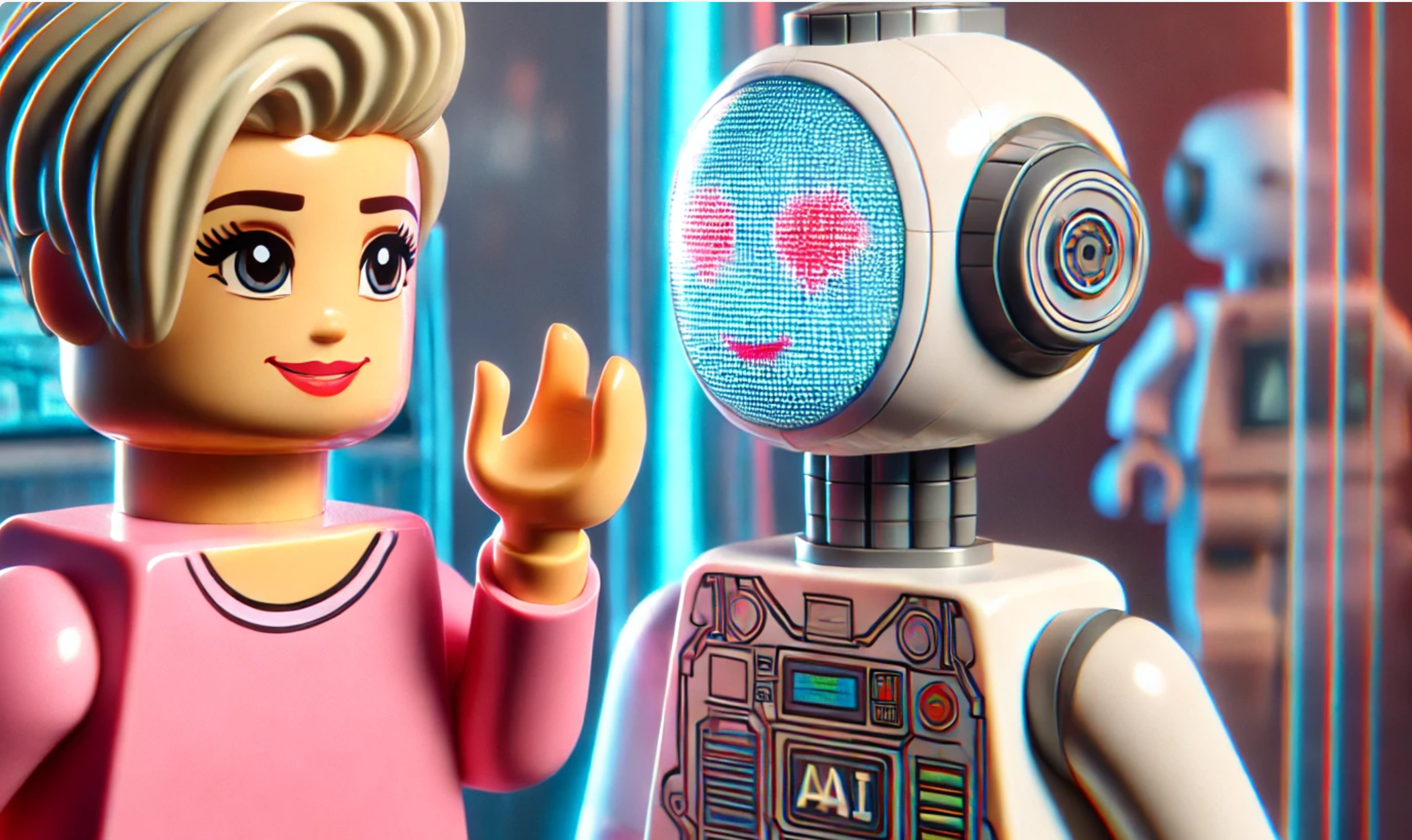
We’ve all been there: asking ChatGPT, Copilot or whatever AI, for something and instinctively saying “please” or “thank you.” It feels polite, right? But AI doesn’t care. Talking to it like it’s a person isn’t helping anyone, and it might actually harm how we think about these systems.
We humans love to project human traits onto things that aren’t human - a concept called “anthropomorphism”. We name our cars, swear at our laptops when they freeze, and now, we talk to AI as if it has thoughts and feelings. AI, however, doesn’t think, feel, or care about your mood. When we say “please” or “thank you” to it, we’re blending the lines between what’s human and what’s not.
This tendency to anthropomorphize AI is everywhere. We refer to AI as “learning”, “reasoning” or even “understanding”, but in reality, these systems aren’t experiencing anything like a human would. We talk about AI this way because it helps us make sense of the complex tech behind it. But in doing so, we risk overestimating its capabilities and assuming it has qualities - like empathy or understanding - that it simply doesn’t. This leads to problems:
- it creates false expectations: We’re subtly reinforcing the idea that it understands us in the same way a human would. It doesn’t. AI processes data and performs tasks. It’s not reading between the lines, and it doesn’t “feel” appreciated when you’re polite.
- it distorts what AI can really do; anthropomorphizing AI can make us think it’s more capable than it is. We might assume AI can “learn” like a human or make decisions with some form of understanding. But that’s not the case.
- it shifts responsibility away from us. The more we treat AI like it’s human, the more we might let go of our own responsibility. AI can’t be held accountable for its actions or biases - we can.
Oh yeah, how could I forget “Being Nice to the Future Overlords”? Some of us joke about being polite to AI “just in case they become our future robot overlords.” The idea is that if AI takes over, those of us who were nice to them will get a better deal. It’s a funny thought, but it also fuels this whole Terminator-style narrative where AI is this malevolent force waiting to exploit us. That’s not what AI is about - treating it like a potential overlord makes it harder to understand what AI really is: a tool designed by humans, for humans. When we treat AI like it’s something with power or agency, we buy into this dystopian idea of AI taking control, which really just distracts us from thinking about AI responsibly. The killer robot storyline harms our ability to grasp the real issues around AI, like biases, privacy, and ethical usage.
If we want to use AI responsibly, we need to understand it better. It’s not enough to not anthropomorphize it - We need to know how to interact with it to advance society.
Published on:
Learn moreWe can help you with Why you shouldn’t say 'please' or 'thank you' to AI (and why it matters)
If you want help implementing, troubleshooting, or improving this product, contact us and we’ll point you in the right direction.
Related posts
You are holding GitHub Copilot Wrong!
Most developers think that one can’t really use GitHub Copilot wrong. There is a chat interface that lets you also choose a model, so th...
You are holding GitHub Copilot Wrong!
Part 0 showed why constant prompting, re-prompting, and steering GitHub Copilot feels fragile. Not because Copilot is unreliable, but because ...
Building a Multi-Hierarchy Ticket Classification System (Because Keywords Aren't Enough)
Look, I love a good keyword-based system as much as the next developer. They’re fast, predictable, and when your user says “VPN,&r...
Secretless cross-tenant dataverse access
Client secrets are like hiding your house key under the mat; easy to grab and impossible to audit. Certificates are just slightly better, beca...
How Azure CLI handles your tokens and what you might be ignoring
Running az login feels like magic. A browser pops up, you pick an account, and from then on, everything just works. No more passwords, no more...
How Dev Proxy teaches you to make your apps more resilient
I added Microsoft Dev Proxy to my Mermaid → Dataverse converter, because I wanted to test how it handled rate limits and API errors. What I go...
Building Azure functions that never store secrets — ever
What if your function could hit Microsoft Graph with no client secrets, no certs, and no Key Vault entries? That is exactly what a Managed id...
Introducing Mermaid to Dataverse Converter
Why diagrams matter (and why they usually fail us) Entity-Relationship Diagrams (ERDs) are the universal shorthand for talking about data mode...
It’s OK to be seen trying
It’s OK to be seen trying Somewhere along the way, we started believing that you’re only allowed to speak after you’ve figured everything out....
Stuck in pilot - Part 1: no foundations, no future
“We just need to test the AI. We’ll figure out the data later.” That sentence has quietly killed more AI pilots than any model failure ever ...