
Public Preview of Azure Arc Site Manager
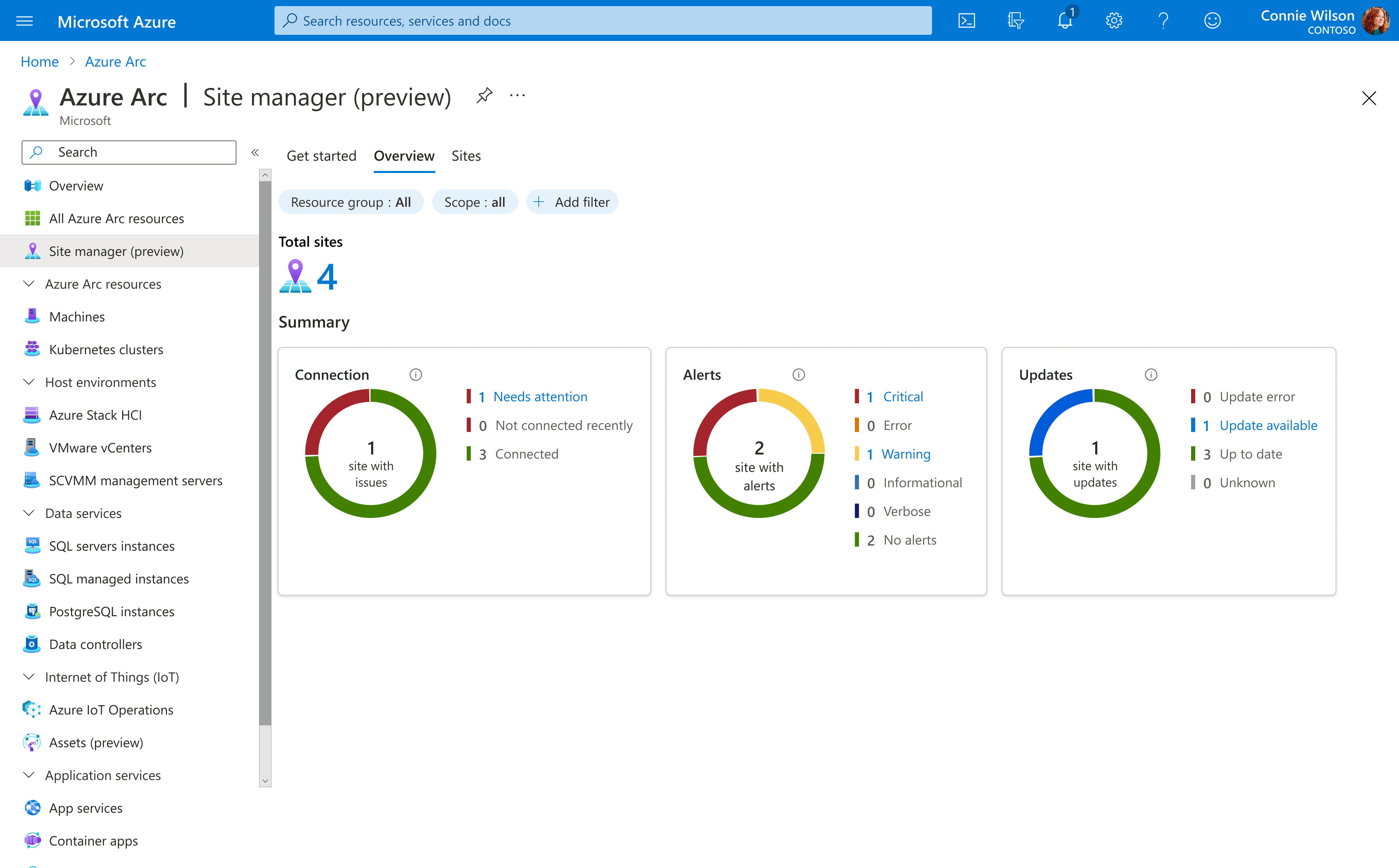
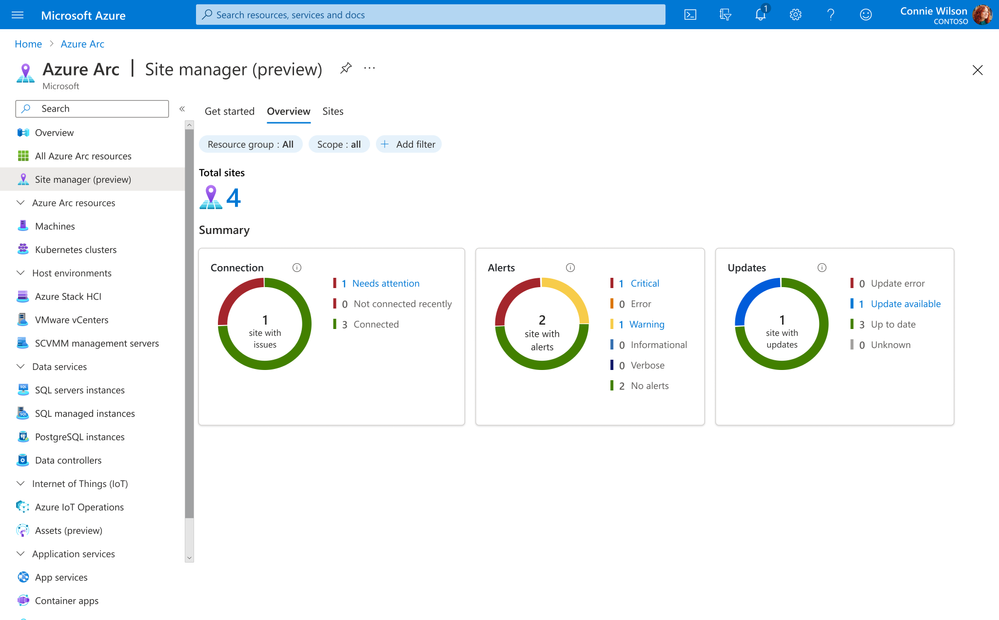
This week we are excited to announce the Public Preview of Azure Arc site manager. We designed site manager to meet the needs of customers who manage solutions on the adaptive cloud and want to view and monitor their resources according to their physical locations, such as stores, restaurants, and factories. Within site manager, customers can create Arc sites to represent their on-premises environments and see centralized monitoring information across their edge infrastructure.
Get Started
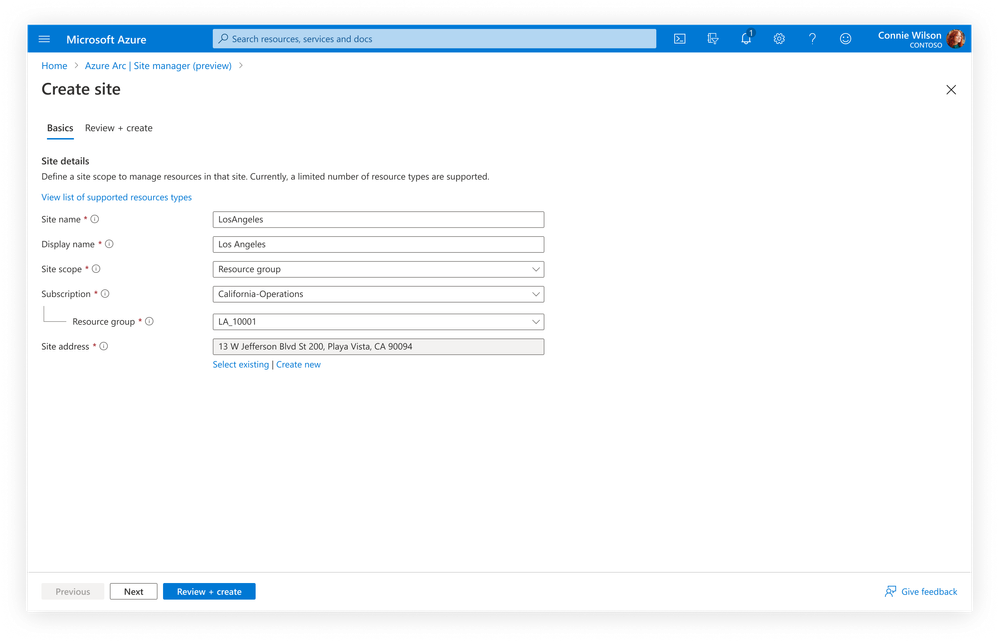
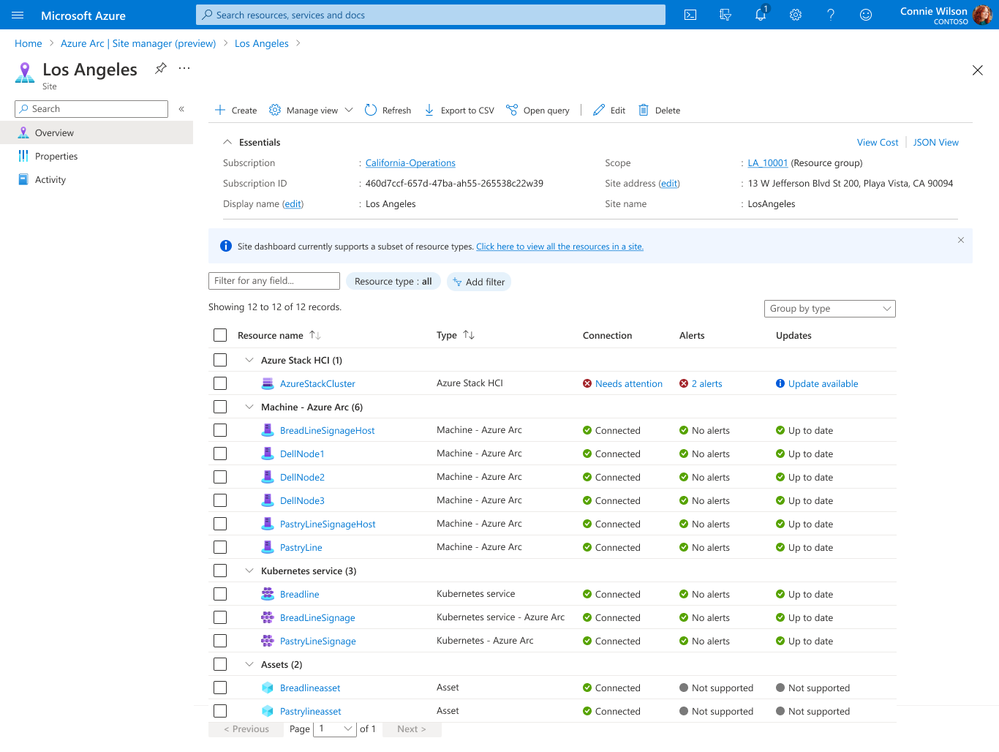
You can get started by navigating to site manager within Azure Arc (aka.ms/sitemanager). Sites can be created on a resource group or subscription today, and site manager currently supports Azure Stack HCI, Azure Arc-enabled servers & VMs, Azure Arc-enabled Kubernetes, and Azure IoT Operations assets. After site creation, all supported resources automatically appear within the site.
For at-scale scenarios, Arc sites can also be created via Infrastructure-as-Code. To learn more, see aka.ms/IaCQuickstart.
Site Monitoring Capabilities
Once the site is created, you can see aggregated connectivity, alerts, and updates for the site. Connectivity status comes automatically for supported resources, update status via Azure Update Manager, and alerts through Azure Monitor, which can be configured following this guidance. Additionally, each Arc site has its own page where more detailed troubleshooting and remediation can be performed.
Coming Soon
Site manager is currently in public preview, and the following features will come soon:
- Ability to create sites on a subset of resources in multiple resource groups and/or subscriptions
- Support for more resource types, including Arc-enabled SQL servers, Arc-enabled VMware vSphere, and some cloud resources
- Expansion to security and health monitoring
Next Steps
Check out our documentation (aka.ms/sitedocs) and go to the Azure portal to try out Azure Arc site manager today (aka.ms/sitemanager). Additionally, feel free to provide feedback to our team here.
Published on:
Learn moreWe can help you with Public Preview of Azure Arc Site Manager
If you want help implementing, troubleshooting, or improving this product, contact us and we’ll point you in the right direction.
Related posts
Azure Adaptive Cloud Pre-Days at Microsoft Ignite 2024
As the excitement builds for Microsoft Ignite 2024, tech enthusiasts and professionals worldwide are eagerly anticipating the Azure Adaptive C...
Launching the Arc Jumpstart Newsletter: October 2024 Edition
👋 Welcome! We are excited to kick off this monthly newsletter, where you can get the latest updates on everything happening in the Arc Jumpst...
Announcing Public Preview of Windows Server Hotpatch enabled by Azure Arc
We’re excited to announce the Public Preview of Hotpatch enabled by Azure Arc for Windows Sever 2025 Datacenter and Standard editions! ...
Public Preview of Azure Container Storage enabled by Azure Arc Edge Volumes
Release Summary We are thrilled to announce the Public Preview of Azure Container Storage enabled by Azure Arc Edge Volumes, a groundbre...
Introducing ArcBox 3.0 General Availability
Today, the Arc Jumpstart team is excited to announce the general availability of ArcBox 3.0! Since it was first introduced in 2021, Ar...
CloudCasa for Azure Arc
Azure Arc is a platform that helps users build and develop their applications by extending Azure to their datacenters, edge, or even to multic...
Generally Available: Transition to WS2012 / R2 ESUs enabled by Azure Arc from Volume Licensing
Customers that have enrolled in WS2012/ R2 ESUs through Volume Licensing for Year 1 can transition to Azure Arc for Year 2 of the program. Ext...
Comparing feature sets for AKS enabled by Azure Arc deployment options
This article shows a comparison of features available for the different deployment options under AKS enabled by Azure Arc. ...
Increasing Security for SQL Server Enabled by Azure Arc
Back in November 2023, the least privileges deployment model was introduced as a public preview. After thorough testing, we are excited to ann...
Five Key Updates on WS2012 ESUs enabled by Azure Arc
We have a myriad of key updates for customers enrolled in WS2012/R2 ESUs enabled by Azure Arc! As we continue to refine and expand the offer, ...