
Microsoft Teams Multi-window support and Call Me are now in GA on Azure Virtual Desktop
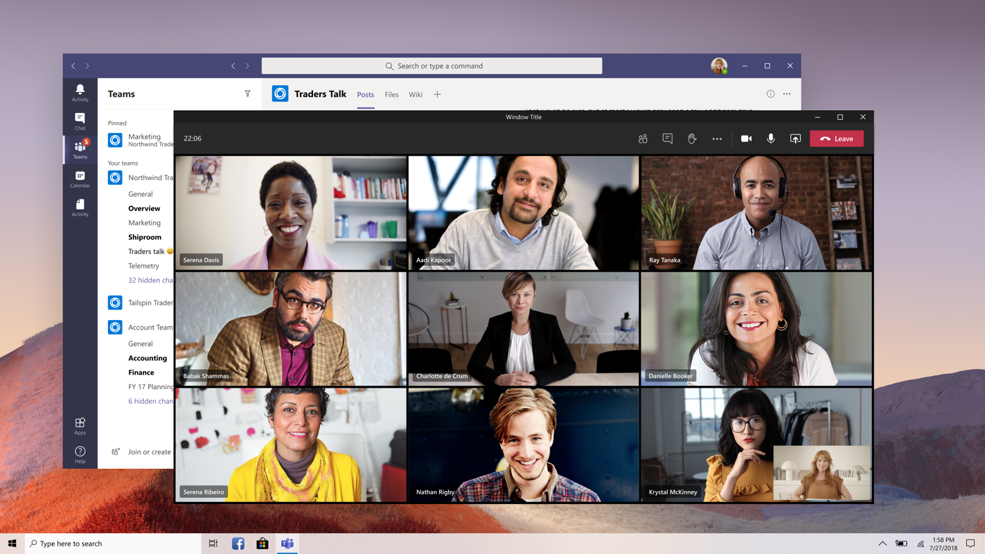
We are happy to announce that Teams Multi-window support and Call Me are now in GA on Azure Virtual Desktop.
Multi-window capability provides users the option to pop out chats, meetings, calls, or documents into separate windows to help streamline their workflow. It also brings new experiences to Azure Virtual Desktop, such as Call Me. Previously, during a Teams meeting, if a user went to check their calendar, the meeting window would minimize to the corner of the screen. Now with Multi-window support, users can view full-sized separate windows for meetings/calls and the main Teams client during a Teams meeting.
Additionally, meeting and call controls such as mute, video, chat, leave, and more are now located at the top of the meeting window so that they are always available and never block the underlying content.
Separate windows – View meetings and calls in separate windows from the main Microsoft Teams client.
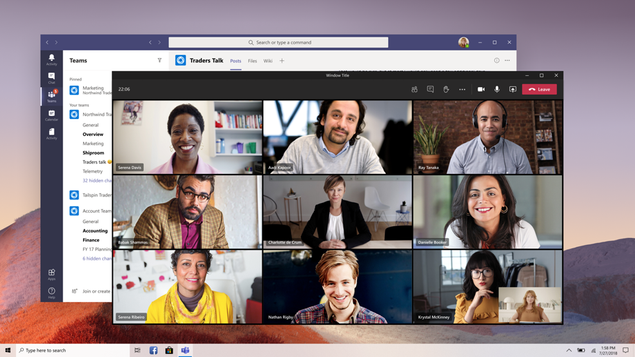
Meeting controls – Easier access to meeting controls now located at the top of the meeting screen, out of the way of content and video being shared.

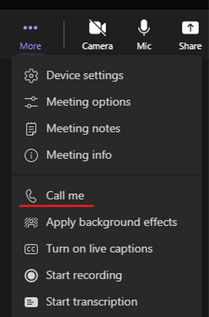
Call me - A new feature allowing users a way to transfer a Teams call to their phone over a PTSN network.
Getting Started
To use Microsoft Teams Multi-window, the latest Teams Desktop version 1.5.00.11865 (download MSI here, download EXE here) is required to enable the feature on Azure Virtual Desktop.
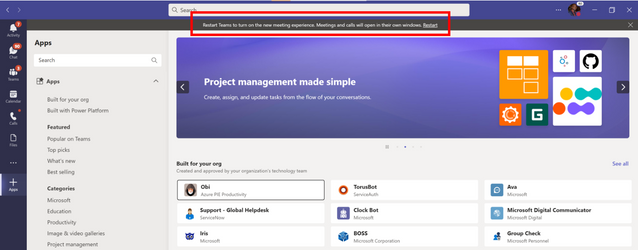
After the Teams desktop client is updated to version 1.5.00.11865, you will see a banner (see screenshot below) when you open the new Teams desktop client for the first time. Restart Teams desktop app to turn on Multi-window.
To verify Multi-window is on, right-click on any chat and if “pop out chat” is showing in the options, Multi-window has been successfully turned on.
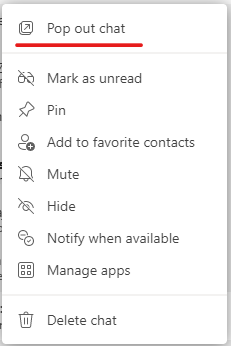
Call me feature is automatically available with Multi-window. Refer to Set up the Call me feature on how to set up your phone.
Set up Teams on Azure Virtual Desktop
New to the service? Refer to the Teams on Azure Virtual Desktop documentation on how to set up Microsoft Teams.
Teams Multi-window is also available on Windows 365. To learn more, go to: https://aka.ms/W365TeamsMultiwindowBlog
Published on:
Learn moreRelated posts
App attach now integrates with partner solutions
For many IT admins, application delivery management is one of their most complex tasks. However, with the recent general availability of App a...
New features for Azure Virtual Desktop for Azure Stack HCI
Today, we’re excited to announce new features and capabilities for Azure Virtual Desktop for Azure Stack HCI that will benefit admins responsi...
MMR Call Redirection for Azure Virtual Desktop, Windows 365 now available
Today, I am pleased to share the launch of Multimedia Redirection (MMR) Call Redirection for Azure Virtual Desktop and Windows 365. Call Redir...
OneDrive support for RemoteApp in Azure Virtual Desktop
We are excited to announce that Microsoft OneDrive support is now available for RemoteApp in Azure Virtual Desktop! Previously, OneDrive could...
Custom Shortpath settings for host pools now available
We are excited to announce the general availability of custom Shortpath settings at the host pool level. Now you can granularly control how RD...
Recovery options for Azure Virtual Desktop session host VMs
Last week an update issue caused unresponsiveness and startup failures on Windows machines using the CrowdStrike Falcon agent, including some ...
Connection Reliability in Azure Virtual Desktop Insights
We are thrilled to announce that the Connection Reliability tab in Azure Virtual Desktop Insights is now generally available. IT administrator...
Preferred app group type settings enhance user feed display
In line with our commitment to provide seamless and efficient experiences for Azure Virtual Desktop users, we've recently implemented Preferre...
App attach for Azure Virtual Desktop now generally available
App attach for Azure Virtual Desktop allows IT admins to dynamically attach applications from an application package to a user session in Azur...
Hibernation support now available for Azure Virtual Desktop
Today we are happy to announce the general availability of hibernation support in Azure Virtual Desktop. Explore additional capabilities that ...