
Semantic Kernel: What It Is and Why It Matters
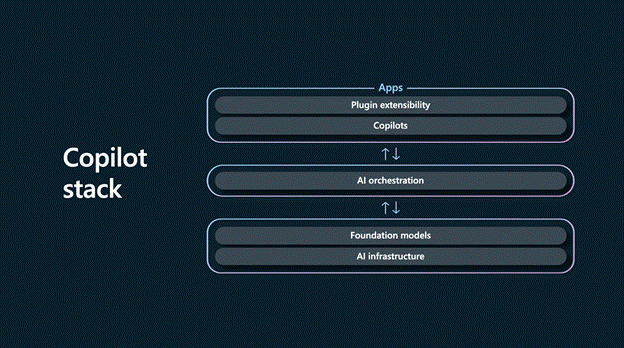
Semantic Kernel is a new AI SDK, and a simple and yet powerful programming model that lets you add large language capabilities to your app in just a matter of minutes. It uses natural language prompting to create and execute semantic kernel AI tasks across multiple languages and platforms. In the latest episode of "Open at Microsoft," we are joined by experts Sam Schillace and John Maeda as they introduce us to the world of the Semantic Kernel—a groundbreaking concept that has redefined Natural Language Processing (NLP) and propelled it to new heights.
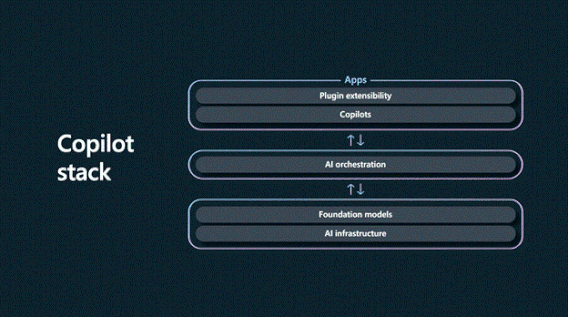
Semantic Kernel is what Microsoft uses to power its own products, like Microsoft 365 Copilot and Bing. It lets you use the same Copilot stack that Microsoft uses to make its apps intelligent while still using your own skills and tools. It is at the center of the copilot stack, enabling the integration of AI plugins from both OpenAI and Microsoft with any model you want, like Azure OpenAI, or Hugging Face.
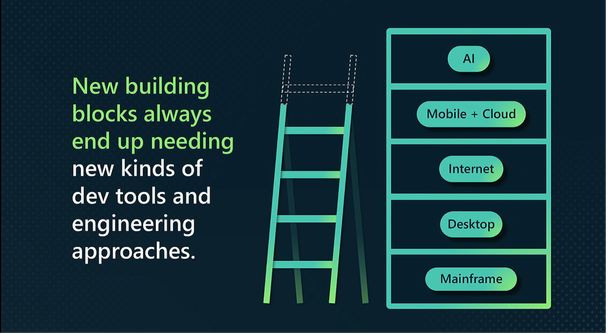
In this episode, we are joined by Sam Schillace as he describes the three building blocks for Modern AI apps today and explains how with the complexities around AI, every time we go through cycles pattern of the tools change there are instances of needing new types of engineering approaches. In AI, semantic kernel represents the essence or core meaning of a text or document, allowing AI systems to understand and process language more effectively. He also shares hints of all the new kinds of developer tools that will be in the future and breaks down the concept of the semantic kernel framework. Watch Sam’s keynote where he speaks more in detail about this concept HERE.
To learn more about semantic kernel and see ways you can contribute to this project, check out the architecture with tools and examples that show you how it works and what you can do with it on the GitHub page. For more resources, check out our page at HERE.

Be on the lookout for the next featured open source episode from the Open at Microsoft show series, and how you can contribute back to the ecosystem. To get new updates of episode releases be sure to subscribe to our YouTube page here.
Published on:
Learn moreRelated posts
This Month in Azure Static Web Apps | 09/2024
We are back with another edition of the Azure Static Web Apps Community! :party_popper: September was yet another month ...
GitHub Copilot for Azure: 6 Must-Try Features
As developers, we are constantly seeking tools that streamline our workflows and boost productivity. … Enter GitHub Copilot for Azure, now in ...
Responsible AI Mitigation Layers
Generative AI is increasingly being used in various kinds of systems to augment humans and infuse intelligent behavior into existing and new a...
Streamline Your Azure Workflow: Introducing GitHub Copilot for Azure in VS Code
I'm excited to announce the public preview of GitHub Copilot for Azure - a new addition to your toolkit that seamlessly integrates with G...
Build Intelligent Apps Code-First with Prompty and Azure AI
Building Generative AI applications can feel daunting for traditional app developers. What does the end-to-end applicati...
Certificación AI-900 (Fundamentos de IA) con Chicas en IA
La inteligencia artificial ha llegado para quedarse, ¡y más aún con la revolucionaria IA generativa! Para ayudar a los profesionales a especia...
Get certified with Learn Live GitHub series!
GitHub Universe is coming, and Microsoft and GitHub are partnering to offer a new special Learn Live series in Brazilian Portuguese, English a...
Certifícate con Learn Live GitHub en Español
Microsoft y GitHub se han unido para ofrecer una nueva serie especial de Learn Live en inglés y español: GitHub 2024. Del 10 al 24 de Octubre,...
Evaluating generative AI: Best practices for developers
As a developer working with generative AI, you've likely marveled at the impressive outputs your models can produce. But how do you ensure the...
Introducing Azure Product Retirement Livestreams
The Azure Retirements team, in collaboration with key partner groups, is excited t...