
Loading...

Solving "Unable to connect" error of Dataverse connector in Power BI

Solving "Unable to connect" error of Dataverse connector in Power BI
Solving "Unable to connect" error of Dataverse connector in Power BI David Uhlmann Mon, 05/08/2023 - 14:56
Body

When utilizing the default Dataverse Connector in Power BI, users may experience occasional malfunctions. As a result, some may switch to the "legacy" connector, which is not a long-term solution. This tip aims to address a common issue faced by numerous users when employing the default connector. The specific problem is as follows:
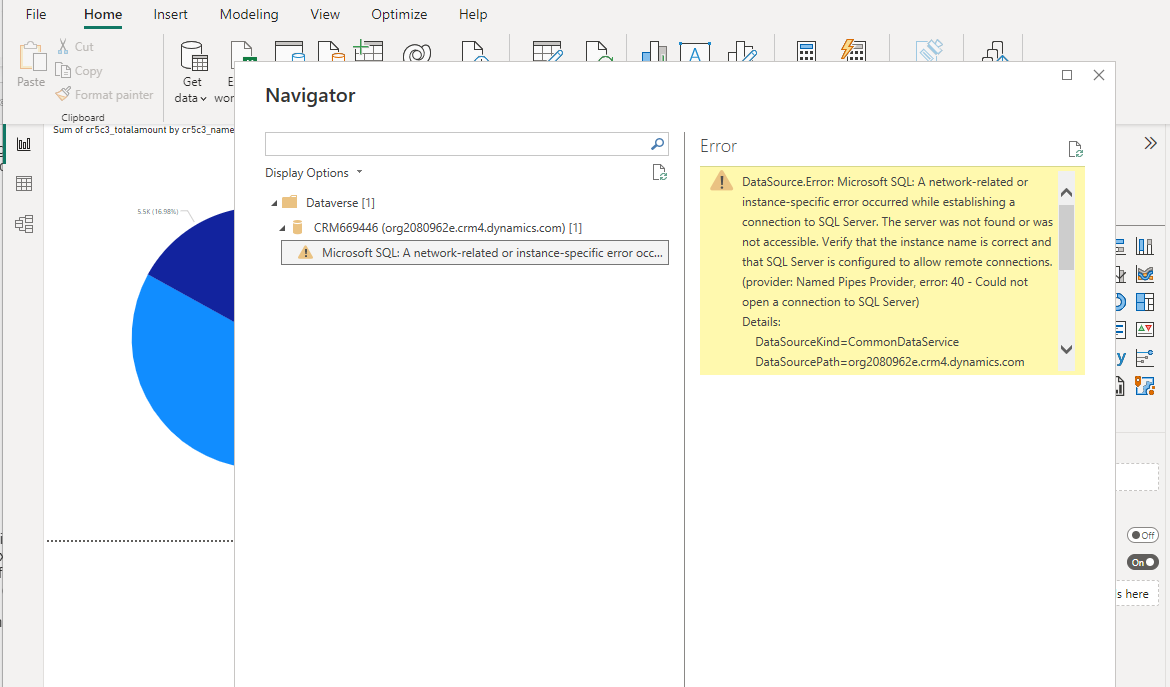
Network Error of Dataverse Default Connector

The inconsistency of this error is particularly troublesome, as it may appear or disappear intermittently, even with identical PBIX files. Following a thorough investigation, the issue was traced not to the connector, but to the network settings of the computer's connected network, irrespective of VPN usage. In other words, the error might not surface when using a customer VPN at home, but may reappear without VPN or when in the office. The root cause stems from Power BI Desktop's attempt to connect to the TDS Endpoint via ports 1433 or 5558. (see link to documentation).

So the solution is to check the connection to these ports via Powershell. This can be done with the following command: 
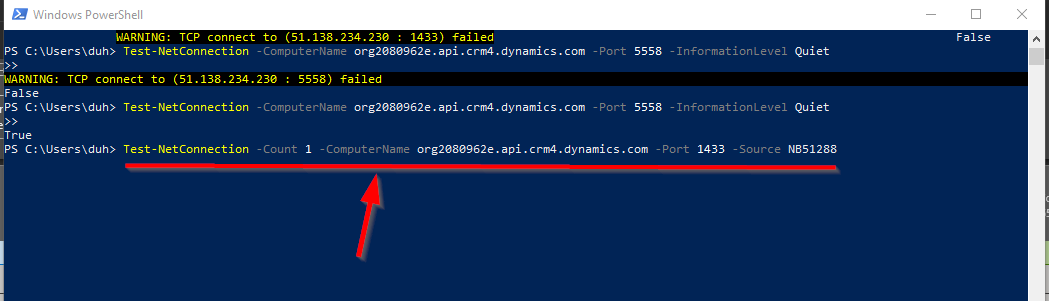
PowerShellCommand

In the screenshot provided, the initial connection attempt was unsuccessful. However, after changing to a different Wi-Fi network and disabling the VPN, the application successfully connected to the ports, enabling the use of the default connector as intended:
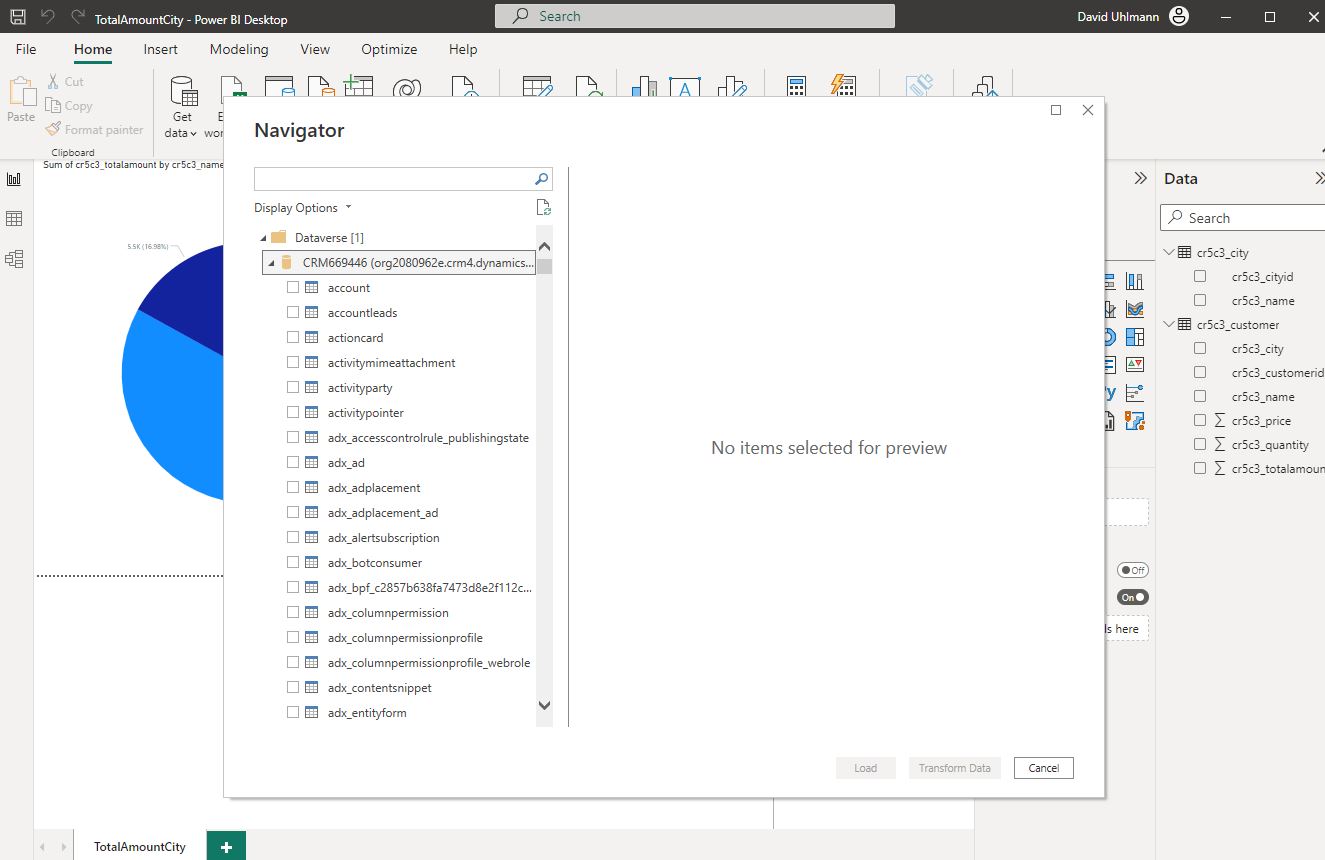
Successful Connection

So all in all, a port issue, but one that has caused headaches for many people. 

Published on:

Learn more
Featured Articles | Dynamics Chronicles

Welcome to our blog, the content is entirely dedicated to Microsoft Dynamics 365, CRM, Power Platform, Common Data Service (CDS) but also Azure. Follow us !

Share post:

Related posts

Dynamics 365, Power Platform, and Role-based Copilot offerings 2026 release wave 1 plans available now

On March 18, 2026, we published the 2026 release wave 1 plans for Dynamics 365, Microsoft Power Platform, and Role-based Copilot offerings whi...

2 days ago

Microsoft 365 & Power Platform Community Call – March 19th, 2026 – Screenshot Summary

Call Highlights   SharePoint Quicklinks: Primary PnP Website: https://aka.ms/m365pnp Documentation & Guidance SharePoint Dev Videos Issues...

3 days ago

How to Build a Parameterized Environment-Switching Data Source in Power BI for Dataverse (Production-Ready Approach)

In enterprise Power BI reporting, connecting to Dynamics 365 / Dataverse using a fixed environment URL makes deployments fragile. Every time y...

3 days ago

Dynamics 365, Power Platform, and Role-based Copilot offerings 2026 release wave 1 plans available now

On March 18, 2026, we published the 2026 release wave 1 plans for Dynamics 365, Microsoft Power Platform, and Role-based Copilot offerings whi...

3 days ago

How to create a Power BI Semantic Model online (No need for PBI Desktop)

It has been in the service for quite a while so I thought I would blog about it in terms of how you can create a power BI semantic model simpl...

4 days ago

Power Platform – March 2026 – Screenshot Summary

Community Call Highlights   Quicklinks: Power Platform Community: Power Apps Power Automate Power BI Power Virtual Agents Power Pages M365 Pla...

4 days ago

2026 release wave 1 plans for Microsoft Dynamics 365, Microsoft Power Platform, and Copilot Studio offerings

We’re excited to publish the 2026 release wave 1 plans for Microsoft Dynamics 365, Microsoft Power Platform, and Role-based agents in Microsof...

4 days ago

Power BI March 2026 Feature Summary

Welcome to the Power BI March 2026 Feature Summary—and welcome to FabCon! As FabCon gets underway, this month’s update reflects the momentum w...

4 days ago
Stay up to date with latest Microsoft Dynamics 365 and Power Platform news!
* Yes, I agree to the privacy policy