
Caching NFS, High-Throughput VMs and More HPC Cache Developments

When you are managing large read intensive workloads, minimizing latency to your stored data simply makes sense for both efficiency and cost management. Azure HPC Cache helps to do both, and we’ve just made a few announcements to take this a few steps further.
We just added support for three new features that will drive your value in Azure!
Read Caching with NVMe Storage
Customers can now create HPC Cache instances that reap the benefits of NVMe cache storage media. Leveraging these high-throughput, low-latency storage devices permit higher performance at lower prices for read-intensive workloads. Learn more about
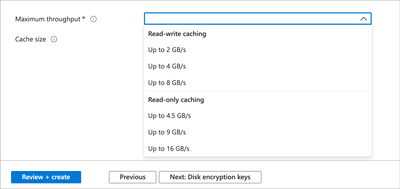
storage-optimized VMs in Azure and HPC Cache. HPC Cache will be available for three NVMe-based SKUs: 4.5 GB/s, 9 GB/sec, and 16 GB/s.
Blob NFS 3.0 Support E-Series General Availability
In April of this year, we shared our preview of support for NFS 3.0, which was also being previewed. The Azure Blob team just shared that Blob NFS 3.0 protocol support is generally available and HPC Cache will follow suit with general availability using existing 2 GB/sec, 4 GB/sec, and 8 GB/sec SKUs.
Support of NFS 3.0 enables use of both NFS 3.0 and REST access to storage accounts. For customers seeking to run file-dependent workloads in Azure, you can now do so directly against Azure Blob containers using NFS 3.0 protocol. Because HPC Cache features an Aggregated Namespace, your file system can incorporate NFS 3.0-enabled containers into a single directory structure even when operating against multiple storage accounts, containers, and even your on- premises NAS exports, easing management and efficiency.
The addition of HPC Cache (caching of NFS data) is the perfect fit when workloads run at-scale across many virtual machines and require lower latency than the NFS endpoint provides. HPC Cache in front of the container will provide sub-millisecond latencies and improved client scalability for access to directories and file data stored in the cache. HPC Cache also responds to client NLM (network lock manager) traffic and manages advisory lock requests with the NLMv4 service.
Blob NFS 3.0 Support for NVMe-based Caches Preview
All the advantages of HPC Cache with Blob NFS 3.0 are also coming to support NVMe SKUs. These high-throughput, low latency cache types can be used for even greater performance at lower costs, perfect for media rending and genomic secondary analysis workloads.
Don’t stop reading yet—we have more. While taking advantage of NVMe support and Blob NFS, check out additional new features sure to please.
Multiple Network Time Protocol (NTP) Servers for Hybrid Clouds
Customers who are using Hybrid cloud architecture may need to use their own Time Servers, often located in their data centers. HPC Cache now supports the configuration of one or three Time Servers for redundancy. The configuration of exactly two NTP servers is not supported.
Metrics per Storage Target
In the past, it was difficult to understand cache capacity utilization on a per storage target basis. In our latest release, you’ll find that you can now view the recycle rate of the cache to provide insight into the demands against HPC Cache. Per-storage-target cache capacity space utilization and availability as well as client activity information (client address, HPC Cache address, and protocol) metrics will also be available in the Azure Portal.
Storage Target Operations
HPC Cache users now have more control over storage target operations with the ability to flush, suspend, and resume storage targets. These new controls will help reduce impacts to clients while managing storage targets.

Network Isolation Documentation
New documentation is available to help customers configure network isolation for HPC Cache workloads. Find the documentation here.
Multiple IPs per NFS Storage Target
Customers using Isilon SmartConnect can enter a fully qualified domain name (FQDN) or a comma-separated list of addresses SmartConnect is using for mounting purposes, enhancing storage target configuration.
HIPAA Compliance
HPC Cache is now compliant with the Health Insurance Portability and Accountability Act (HIPAA). This means that HPC Cache meets standards for adequately protecting personal health information (PHI).
Customer Managed Keys (CMK) Updates
In April, CMK-enabled cache disks became available in all regions where CMK is supported. Now, we’re adding both user assigned identity and default auto key rotation. With default auto key rotation, a key will automatically be set to the latest version. (CMK is not currently supported by NVMe-based SKUs).
Get Started
To create storage cache in your Azure environment, start here to learn more about HPC Cache. You also can explore the documentation to see how it may work for you.
What’s next? We’d love to hear from you!
Published on:
Learn moreRelated posts
Update on classic storage account retirement and upcoming changes for classic storage customers
We previously announced that support would end for retired Azure classic storage accounts on 31 August 2024. Now that we are past the retireme...
Azure Elastic SAN for Azure VMware Solution: now Generally Available
Have you been looking to expand your storage on Azure VMware Solution (AVS), but do not need the extra compute performance and the associated ...
Accelerate metadata heavy workloads with Metadata Caching preview for Azure Premium Files SMB & REST
Azure Files previously announced the limited preview of Metadata caching highlighting improvements on the metadata latency (up to 55...
Announcing UNLIMITED Public Preview of Metadata Caching for Azure Premium SMB/REST File Shares
Azure Files is excited to announce the Unlimited public preview of Metadata Caching for the premium SMB/REST file share tier. Unlimited ...
Azure Backup-SAP HANA DB Backup Delivers More Value at Lower TCO with Reduced Protected Instance Fee
Azure Backup for SAP HANA Database Delivers More Value at Lower TCO with Reduced Protected Instance Fees starting 1st Sept’2024 At Azur...
Switch to Azure Business Continuity Center for your at scale BCDR management needs
In response to the evolving customer requirements and environments since COVID-19, including the shift towards hybrid work models and the incr...
The Azure Storage product group is heading to the SNIA Developer Conference 2024
The Azure Storage product group is heading to the SNIA Developer Conference (SDC) 2024 in Santa Clara, California, USA from September 16th thr...
Latest advancements in Premium SSD v2 and Ultra Azure Managed Disks
We are excited to share the latest advancements in Premium SSD v2 (Pv2) and Ultra disks, the next generation of Azure disk stor...
Unlocking the Potential of Unstructured Data with Microsoft Copilot and Azure Native Qumulo
It has been a true pleasure to see our friends at Qumulo constantly innovating and delivering a service that adds more value with every releas...
Public Preview: Customer Managed Planned Failover for Azure Storage
We are excited to announce customer managed Planned Failover for Azure Storage is now available in public preview. Over the past few ye...