How Microsoft Copilot scales to millions of users with Azure Cosmos DB
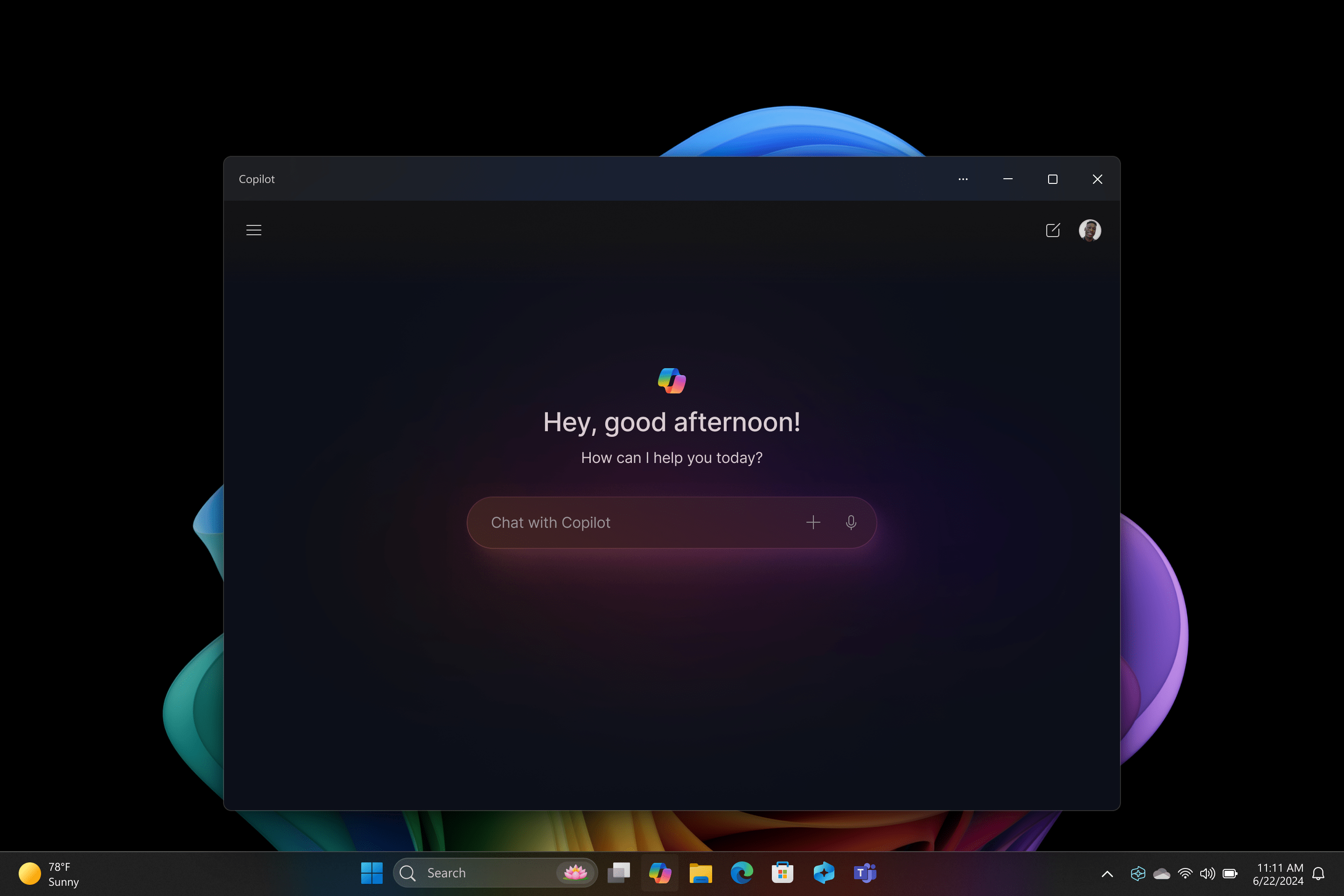
This article is guest authored by Youssef Moussaoui, member of the technical staff, Microsoft Copilot. As part of the team developing Microsoft Copilot, we’re constantly looking for ways to improve the application and keep our millions of users engaged. With this in mind, we recently evaluated the structure of our backend and began looking for […]
The post How Microsoft Copilot scales to millions of users with Azure Cosmos DB appeared first on Azure Cosmos DB Blog.
Published on:
Learn moreWe can help you with How Microsoft Copilot scales to millions of users with Azure Cosmos DB
If you want help implementing, troubleshooting, or improving this product, contact us and we’ll point you in the right direction.
Related posts
Powering Memory in Foundry Agent Service, with Azure Cosmos DB
Move from a locally composed memory-enabled agent to a deployed Foundry Agent Service agent, with keyless Azure infrastructure and an interact...
Azure Cosmos DB in the Agentic Era: Data Tools for Developers and AI Agents
Anthropic’s 2026 Agentic Coding Trends Report captures an important tension in how developers use AI. Engineers report using AI in rough...
I Enabled RBAC and Everything Broke. What Did I Do Wrong?
We covered the roles your Azure Cosmos DB app needs in our previous post. Now let’s look at what happens after you’ve assigned those roles, sw...
Native Agent Memory for Microsoft Agent Framework, Powered by Azure Cosmos DB
Recently we introduced the Agent Memory Toolkit and the Agentic Retrieval Toolkit for Azure Cosmos DB. The Agent Memory Toolkit gives your age...
AI agents, meet the Azure Cosmos DB vNext emulator
If you use the Azure Cosmos DB vNext emulator, you probably know the local development loop: start the emulator, connect to it, create some re...
Building on Vercel’s eve + Azure Cosmos DB: An Agent That Remembers
Most “AI agent” demos forget everything the moment the process exits. That’s fine for a toy project, but useless for anythin...
See our new Azure Cosmos DB Design Patterns
Design patterns are where good data modeling lives or dies. In a NoSQL database like Azure Cosmos DB, the difference between a schema that sca...
Need a different partition key in Azure Cosmos DB? Pick the right approach
Once you create a container, its partition key is fixed at creation, and you can’t change it in place. However, if your original key starts ca...
Spring AI 2.0 is GA: Vector Search, Memory, and Agents on Azure Cosmos DB
The wait is over. Spring AI 2.0 is generally available, and Azure Cosmos DB is right there with it. With this release, Spring AI graduates int...
Which Azure Cosmos DB Role Does My App Need?
In the previous post in the series, we covered the security decisions you make on day one. In this part, we will talk about how to give your a...